

When looking at the sun protection aisle, you are hesitating between SPF 30 and SPF 50, thinking that the latter offers significantly greater protection. In reality, the difference is more subtle than you might think: SPF 30 blocks around 97% of UVB rays while SPF 50 blocks around 98%. This difference of barely 1% therefore raises a legitimate question: which one to choose for your skin?
In this article, we'll look at the difference between SPF 30 and 50, determine if SPF 30 is enough for your situation, and compare SPF 30 vs 50 to help you make the right choice. We will also discuss factors to consider such as your phototype, the season and your activities.
SPF 30 and SPF 50: understanding the protection indices
Meaning of the sun protection factor: The SPF (Sun Protection Factor) measures the effectiveness of a product in protecting your skin against UVB rays, responsible for sunburn. This measurement indicates the time it takes for the skin to redden under the effect of ultraviolet rays. Indeed, SPF only concerns anti-UVB protection and does not measure protection against UVA. To benefit from complete defense, look for a broad-spectrum cream that Protects against both types of radiation.
SPF tests are carried out in the laboratory on volunteers who receive an application of 2 mg/cm² on part of their back. These people are then exposed to varying doses of UV, and experts compare skin reactions with and without sun protection after a day interval. This method makes it possible to obtain the Minimum Erythematous Dose (MED), i.e. the lowest dose of UV causing redness.
Protection levels: low, medium, high and very high: The European Commission has classified sun protection into four distinct categories. Low protections range from SPF 6 to 10. Medium protections range from SPF 15 to 25. High protections cover SPF 30 to 50, while very high protections are SPF 50 and above.
This classification helps you select the product suited to your skin type and exposure conditions. Note that index values and actual protection are not proportional. An SPF 30 filters 97% of UV rays compared to 98% for an SPF 50, which represents a small but significant difference for certain sensitive skin.
How the SPF calculation works: The protection index corresponds to the ratio between the DEM on protected skin and the DEM on bare skin. So, if you get a sunburn after 10 minutes of exposure without protection, an SPF 50 will multiply this time by 50, or 500 theoretical minutes. With SPF 30, this same time would reach 300 minutes.
This formula also results in a simple calculation: 1/index. Consequently, an SPF 30 cream lets 3.33% of UV rays pass through, while an SPF 50 only lets 2% pass through. These percentages explain why SPF 50 offers twice the protection of SPF 30 in terms of filtered radiation.
The difference between SPF 30 and SPF 50 explained simply
97% vs 98%: a difference that makes the difference: An SPF 30 lets in around 3% of UVB rays while an SPF 50 only lets in 2%. In reality, this seemingly small difference means that your skin receives twice as much radiation with SPF 30. Over several hours of exposure, this difference becomes significant for skin health.
Contrary to popular belief, SPF 50 does not increase the duration of protection but its intensity. You must reapply every two hours maximum, regardless of the index chosen. However, the reduced amount of UV that penetrates with SPF 50 further limits the accumulation of long-term damage.
Protection against UVA and UVB: The SPF only measures effectiveness against UVB, responsible for sunburn. UVA penetrates deeper into the dermis and accelerates skin aging without leaving an immediate visible trace. You must check that your cream offers broad spectrum protection against both types of rays.
To ensure adequate UVA defense, look for the circled UVA logo on the packaging, which certifies UVA protection of at least one-third of the displayed SPF. Some studies show that many high SPF creams provide insufficient UVA protection.

Our range SPF LOW-TOX® for protection adapted to each use
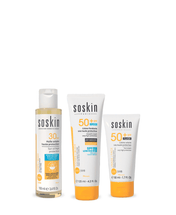
Whether you opt for a daily SPF 30 or an SPF 50 for intense exposure, SOSKIN offers formulas SPF LOW-TOX® : eco-designed, biodegradable solar filters that respect the marine ecosystem, without compromising on efficiency.
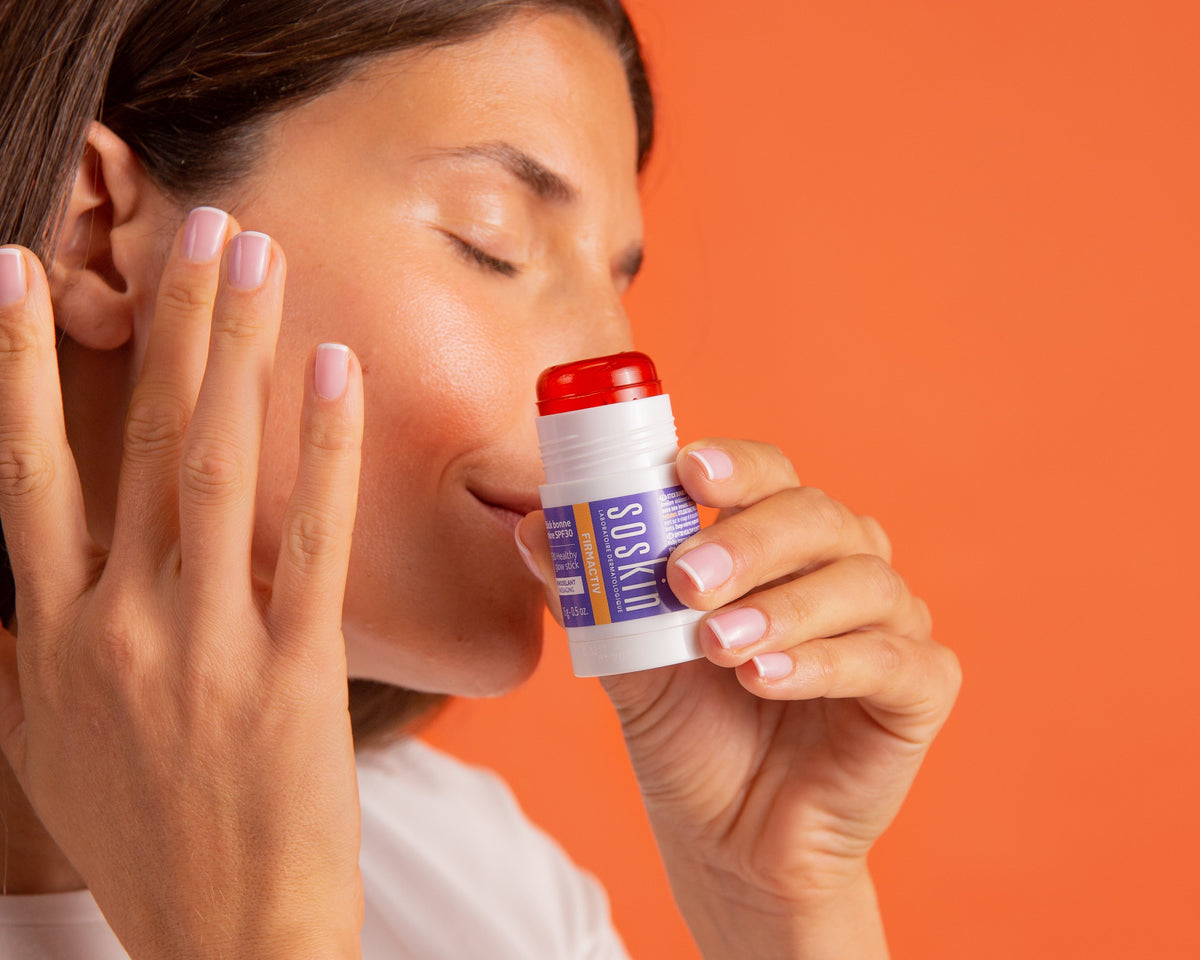
For light daily use, the SPF30 healthy glow stick MOISTURISES, Illuminates and Protects in a quick gesture, perfect for the city or moderate exposure. For enhanced protection on vacation, in the mountains or during prolonged exposure, the High protection invisible fluid SPF50 Protects, mattifies and evens out the complexion without leaving a greasy film — a texture designed not to clog pores.
👉 Discover the SPF30 healthy glow stick
👉 Discover the Invisible Fluid SPF50
All SOSKIN formulas are hypoallergenic and dermatologically tested, suitable even for sensitive skin.
Can you tan with SPF 50?
Yes, you will tan with SPF 50. The term "total sunscreen" has actually been banned in Europe since 2006 because no protection blocks 100% of UV rays. Even with a high index, UV rays activate the production of melanin necessary for tanning.
Furthermore, your skin will take 2 to 3 days to turn nicely colored. An SPF 50 thus allows you to obtain a more uniform and lasting tan by protecting against sunburn.
Choose between SPF 30 and SPF 50 according to your needs
Your skin phototype: Your phototype determines the protection factor you really need. Phototypes I and II, characterized by very fair skin, blond or red hair and light eyes, require SPF 50 or 50+ in all circumstances. These skins produce little melanin and systematically burn in the sun.
Phototypes III and IV, with an intermediate skin tone, can alternate between SPF 30 and SPF 50 depending on exposure. Choose SPF 50 during hot weather or on vacation in a hot country. Phototypes V and VI, with dark skin, protect themselves naturally thanks to their high production of melanin. SPF 15 to 30 is sufficient for daily use, but SPF 30 remains recommended for prolonged exposure.
The season and intensity of the sun: UV rays pass through clouds all year round. However, their intensity varies considerably depending on the season. In winter, a broad spectrum SPF 15 to 30 is suitable for moderate urban exposure. On the other hand, in the mountains where the altitude accentuates exposure, SPF 50 becomes necessary even in the cold season.
Time of day: Between 11 a.m. and 4 p.m., UVB rays reach their maximum intensity. During this critical period, opt for a higher index, especially in summer. In the morning and late evening, medium protection may be enough if you are outdoors.
Geographic area and type of activity: Strongly sunny areas require a permanent index of 50. At the beach, in the mountains or while hiking, SPF 50 offers essential reinforced protection. In town or during a walk, SPF 30 is an excellent compromise.
SPF 30 vs 50 for daily protection: For daily use, SPF 30 is generally sufficient. Apply a generous amount and repeat every two hours.
Maximize the effectiveness of your sunscreen
Uniform application all over the body: The effectiveness of SPF 30 or SPF 50 directly depends on the quantity applied. Laboratory tests use 2 mg/cm² of skin to determine the protection factor. In reality, we generally apply 0.5 mg/cm², or four times less. This under-application drastically reduces real protection: SPF 50 applied in small quantities allows 14% of UV rays to pass through instead of 2%.
For an adult of average build, allow approximately 35 g of cream per application, the equivalent of 30 ml. A practical method is to follow the finger rule: 2.5 fingers for the face and neck, 4 fingers per arm, 6 fingers per leg. Don't forget the ears, the back of the neck, the tops of the feet and the hands.
Common mistakes to avoid: Reapply every two hours, as well as after each swim or heavy sweating. The filters degrade under the influence of light and friction eliminates the protective film. Also check the PAO (period after opening): beyond 6 to 12 months, effectiveness decreases.
The different formats: cream, spray, mist: Solar mists offer rapid application without a greasy film. However, spray generously 15-20 cm from the skin then massage to distribute evenly. Sprays require the same vigilance to avoid underdosing.
Choosing between SPF 30 and SPF 50 essentially depends on your phototype and your exposure conditions. Certainly, the difference in protection seems minimal, but for fair skin or during intense exposure, SPF 50 offers appreciable enhanced security. Therefore, choose SPF 50 on vacation and in the mountains, while SPF 30 is perfect for everyday use. Above all, remember that a generous and regular application remains more important than the index itself to effectively protect your skin.