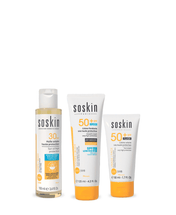


Summer is coming with its sunny days and moments of relaxation outdoors. If the sun brings us vitamin D and good mood, it can also become our worst enemy if we don't take the right precautions. A well-established sun routine is your best ally for taking full advantage of the summer season while preserving your health capital. Let's discover together how to build this optimal protection, gesture by gesture.
Understanding the dangers of the sun in summer
Before adopting the right reflexes, it is essential to understand why our skin needs reinforced protection during the summer period.
Harmful effects of UVA and UVB
Solar radiation is made up of different types of ultraviolet, each of which has its own effects on our body. The UVB, more energetic but less penetrating, are responsible for tanning but also sunburn. They represent approximately 5% of UV rays that reach the earth's surface.
The UVA, as for them, constitute 95% of UV radiation. More insidious because they are painless, they penetrate deep into the dermis and cause long-term cellular damage. Unlike UVB, it passes through clouds and glass, exposing us even on overcast days or indoors near a window.
Sunburns and burns
Sunburn is the most immediate manifestation of excessive exposure. This superficial burn is characterized by redness, a feeling of heat and sometimes blisters. Beyond the immediate discomfort, each sunburn damages the DNA of our skin cells and significantly increases the risk of developing skin cancer later.
Premature skin aging
Repeated sun exposure without appropriate protection considerably accelerates skin aging. Wrinkles, brown spots, loss of elasticity: these signs of aging are largely due to cumulative UV damage. It is estimated that 80% of visible facial aging is caused by sun exposure, a phenomenon called photoaging.
Risks of skin cancer
The most serious danger remains the development of skin cancers. Melanoma, the most aggressive form, sees its incidence triple every 20 years in Western countries. Carcinomas, although less fatal, represent the most common cancers. The good news? Most of these cancers are preventable with adequate sun protection.
Choosing the right sun protection
Faced with the multitude of products available, how do you navigate to make the right choice?
Sun Protection Index (SPF): What does it mean?
The SPF (Sun Protection Factor) indicates the level of protection against UVB. Concretely, a SPF 30 means you can theoretically stay 30 times longer in the sun before getting sunburned, compared to unprotected skin.
For summer, choose a minimum SPF of 30, ideally 50+ for fair skin or during activities in full exposure. Contrary to popular belief, a high SPF still allows you to tan, but in a more gradual and secure way.
Choose a broad spectrum (UVA and UVB protection)
Your sunscreen must protect against both types of UV. Look for the words “broad spectrum” or the circled UVA logo on the packaging. This double protection is essential for optimal defense of your skin.
Adapt the protection to your skin type and activity
Your phototype partly determines the level of protection needed:
- Very light skin (phototypes I and II): SPF 50+ required
- Dark skin (phototypes III and IV): SPF 30 minimum, 50+ recommended
- Dark skin (phototypes V and VI): SPF 15 to 30 depending on exposure
The activity practiced also influences your choice. For swimming or sports, opt for a formula resistant to water and perspiration.
Favor pleasant textures to facilitate application
Sun protection that you don't apply for lack of pleasure is useless. Fortunately, modern formulations offer increasingly pleasant textures: light fluids, creamy milks, practical sprays... Test different options to find the one that suits you best.
Applying sunscreen correctly: a crucial step
Having the right product is not enough: it is the way you apply it that determines its real effectiveness.
The amount of cream to use
The golden rule? 2 mg per cm² of skin, or approximately 35 ml to cover the entire body of an adult (the equivalent of 6 teaspoons). For the face alone, count one level teaspoon. This quantity may seem large, but it is the one used in the laboratory to determine the advertised SPF.
Areas often forgotten
Some areas regularly go under the radar during application:
- Ears and scalp (especially bald areas)
- The eye contour and upper eyelids
- The bridge and wings of the nose
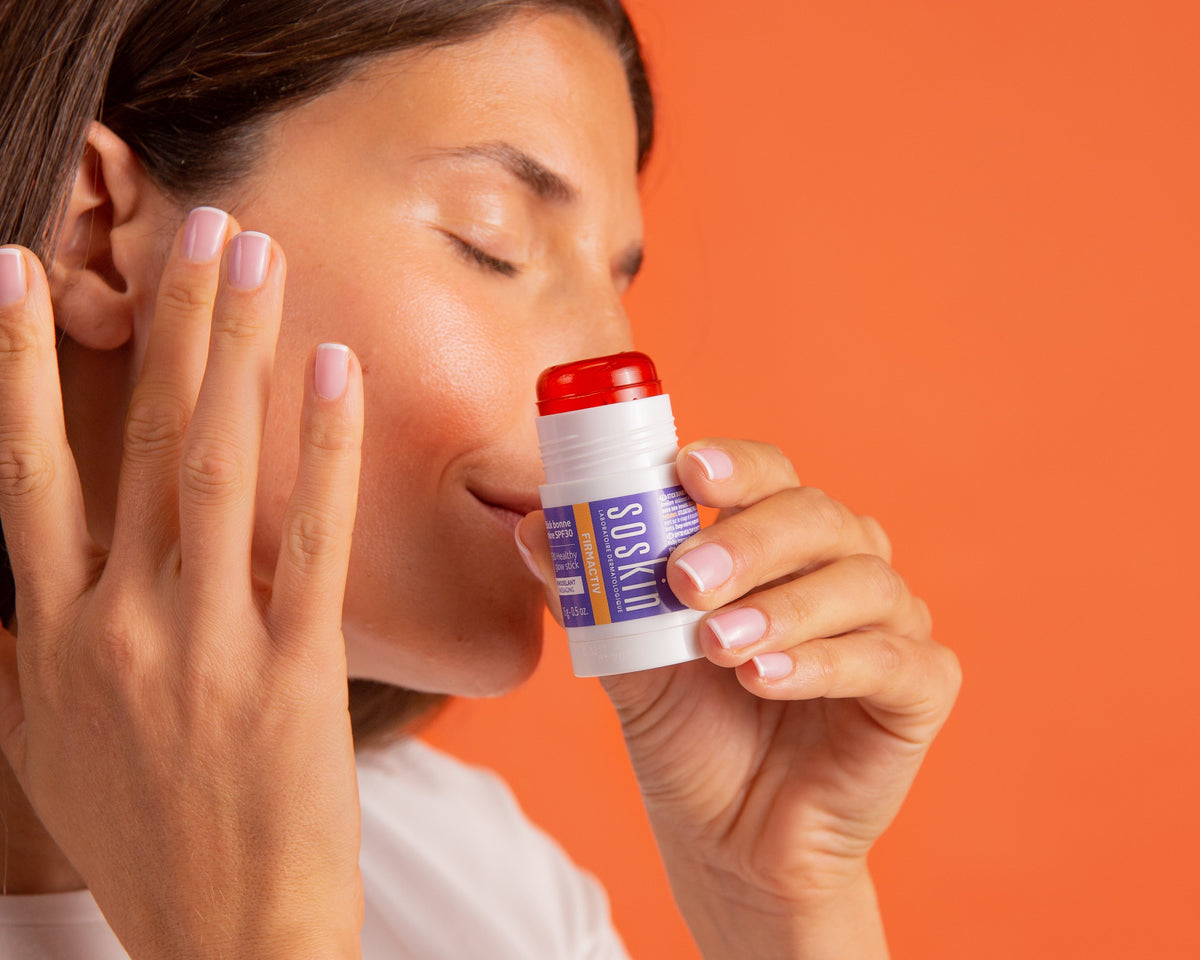
- Lips (use a specific stick SPF 30 minimum)
- The tops of the feet and between the toes
- Hands, often forgotten after application
The frequency of reapplication
Renew the application every 2 hours minimum, and systematically after each swim, intense sweating session or friction (towel, clothes). This rule even applies to waterproof creams, which are resistant but eventually fade.
Apply before exposure
Anticipate! Apply your sun protection 20 to 30 minutes before to go out. This delay allows the filters to adhere well to the skin and offer immediate protection upon exposure.
The other essential actions of sun routine
Sunscreen, although essential, is only one element of complete protection.
Avoid exposure during the hottest hours
Between 11 a.m. and 4 p.m., the UV intensity reaches its maximum. During this time, seek shade as much as possible. If you must go out, reinforce your protection with covering clothing and frequently reapply your sunscreen.
Wear covering clothing and a hat
Textiles provide an excellent physical barrier against UV rays. Prioritize:
- Of long sleeve clothing in tight materials
- A wide brimmed hat (minimum 7-10 cm) protecting face, neck and ears
- Dark colors that absorb UV rays better than light colors
For water or beach activities, anti-UV clothing (UPF standard) offers optimal protection even when wet.
Protect your eyes with sunglasses (category 3 or 4)
Your eyes are particularly vulnerable to UV rays. Choose sunglasses bearing the CE standard and offering protection category 3 (general use) or category 4 (high mountains, sea, desert). The lenses must be large enough to cover the entire eye and filter 100% of UV rays.
Stay hydrated enough (drink water)
Sun exposure increases the body's water needs. Drink regularly and in small quantities, without waiting for the feeling of thirst. Allow at least 1.5 liters of water per day, more in the event of physical activity or high heat.
Use after-sun after exposure
After-sun is not just a marketing product! Its soothing and hydrating formula helps the skin recover after exposure. Apply it to clean, slightly damp skin to optimize hydration.
Sun routine for children: special attention
The skin of the youngest requires increased vigilance and specific measures.
More fragile children's skin
Infant skin has characteristics that make it particularly vulnerable:
- Thinner epidermis and immature defense system
- Melanogenesis (melanin production) insufficient
- Body surface area/weight ratio more important, increasing the relative exposure
The infants under 6 months should never be exposed directly to the sun, as their skin is incapable of defending itself effectively.
Use of specific protections (high index, mineral filters)
For children, systematically opt for:
- A SPF 50+ without exception
- Of mineral filters (zinc oxide, titanium dioxide) better tolerated than chemical filters
- Formulas specially designed for sensitive skin
- Textures water resistant adapted to their activities
Additional precautions (shade, anti-UV clothing)
Multiply the protective barriers:
- Prioritize activities in the shade between 11 a.m. and 4 p.m.
- Equip them with anti-UV clothing covering arms and legs
- Opt for one wide brimmed hat and suitable glasses
- Install UV parasols or filter beach tents
Taking care of your skin after the sun
The routine doesn't end when the sun goes down. Post-exposure care is crucial to maintaining skin health.
Gentle cleaning
After exposure, gently remove sunscreen residue, salt, chlorine and accumulated impurities. Use a gentle cleanser without soap, ideally in the form of milk or makeup remover oil, to preserve the weakened hydrolipidic film.
Intense hydration (after-sun or moisturizer)
Sun exposure intensely dehydrates the skin. Compensate for this loss with:
- A after-sun with soothing properties (aloe vera, calendula, hydrotherapy)
- A rich moisturizing cream if you don't have after-sun
- The application on slightly damp skin for a “wet skin” effect
- Specific care for face and eye area
Conclusion: Enjoy summer while protecting your skin
An effective sun routine is based on the combination of several simple but essential actions: choosing the right protection, applying it correctly and frequently, supplementing it with physical protection, and taking care of your skin after exposure.
These habits, far from being restrictive, will quickly become automatic habits that will allow you to fully enjoy the pleasures of summer. Your skin will not only thank you immediately by avoiding sunburn, but also in the years to come by maintaining its health, suppleness and natural radiance.
Remember: there is no such thing as a "healthy tan" in the strict sense, but it is entirely possible to tan gradually and lastingly by respecting these protection rules. Summer is waiting for you, so equip yourself properly and enjoy every moment under the sun!