

Summer is approaching and with it, family outings in the sun. Whether for a day at the beach, a picnic in the park or simply a walk, protecting your family from UV rays becomes a top priority. But how to go about it effectively depending on each person’s age? Between the specific needs of babies and the habits to instill in adolescents, family sun protection requires an adapted and well-thought-out approach.
Why is sun protection essential for the whole family?
The risks of the sun for young and mature skin
The sun spares no one, but it does not affect us all in the same way. Children have particularly vulnerable skin : finer and less pigmented, it has immature defense mechanisms against UV rays. Their skin can burn up to three times faster than that of an adult.
In adults, risks change with age. If mature skin has developed certain defenses, it also accumulates damage from the past. Age spots, premature aging and the risk of skin cancer increase with cumulative exposure over the years.
Highlight : according to dermatologists, 80% of sun damage occurs before the age of 18. Hence the crucial importance of protecting our children from an early age.
Sunburn prevention and long-term damage
Beyond painful and spectacular sunburns, the sun causes invisible but lasting damage. UVA rays penetrate deep into the skin and alter collagen fibers, accelerating skin aging. UVB rays are responsible for sunburn and can damage cell DNA.
Family sun protection therefore has a dual objective :- Prevent immediate effects (sunburn, dehydration)- Limit long-term risks (skin cancer, premature aging)
Sun protection for babies and young children
Specific recommendations for infants
Golden rule: babies under 6 months should never be exposed directly to the sun. Their thermoregulation system is immature and their skin extremely sensitive. Favor: - Early morning or late afternoon outings - Permanently shaded areas - Long, light clothing - Wide-brimmed hat - Stroller with sun visor or parasol
For babies aged 6 months to 2 years, direct exposure is still not recommended, but you can start using sunscreen on small exposed areas (face, hands) if total shade is not possible.
Choosing the sunscreen suitable for babies (index, composition)
Opt for sunscreens specially formulated for babies., with :- An SPF 50+ index minimum- Mineral filters (zinc oxide, titanium dioxide) rather than chemical- A hypoallergenic composition fragrance-free, alcohol-free, paraben-free- A thick texture which remains clearly visible to control the application- The word “water resistant”
Organic creams are often recommended for toddlers because they contain fewer potentially irritating additives.
Application tips for little ones
Applying sunscreen to a baby requires patience and gentleness:Before release:- Apply the cream 20-30 minutes before exposure - Use a generous amount (the skin must remain white) - Do not forget any area: ears, neck, tops of the feetDuring the exhibition:- Reapply every 2 hours maximum - Reapply immediately after each contact with water - Check regularly that clothing covers wellPractical tip: Turn the app into a game moment by singing or telling a story. This will make the experience more enjoyable for your child.
Sun protection for older children and adolescents
Involve children in sun protection
From 3-4 years old, involve children in their own protection is essential for creating good habits. Just explain to them why it's important: "The sun can hurt your skin, like when you burn yourself in the kitchen."
Effective strategies:- Let them choose their hat or sunglasses - Create a "sunscreen" ritual before each outing - Use comparisons they understand (cream as a shield) - Praise them when they think about asking for cream
For adolescents, focus on information and autonomy. Explain the real risks (skin aging, premature wrinkles) and the aesthetic benefits of good protection.
Creams, sprays, and sticks: the different options
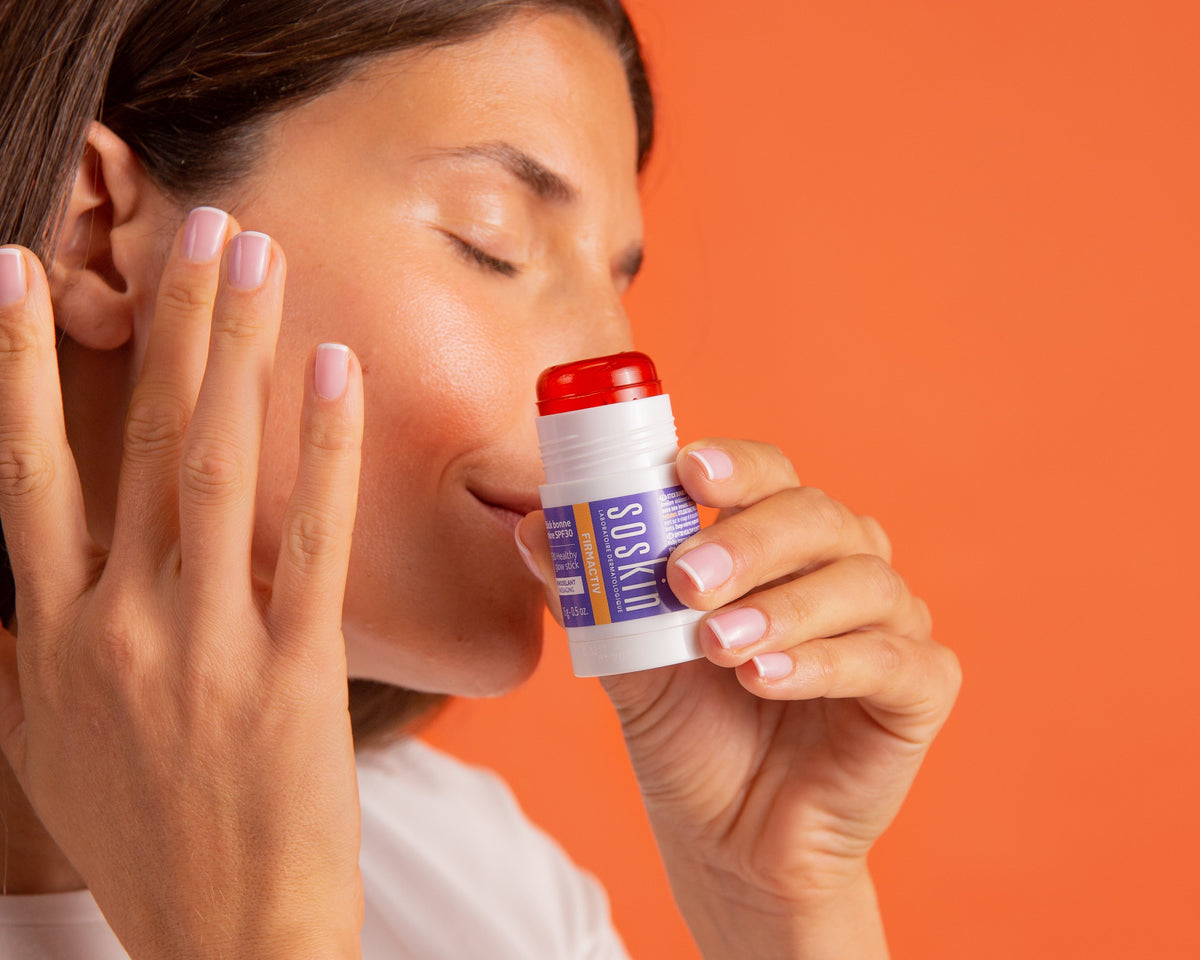
The different textures each have their advantages:Classic creams:- Optimal and long-lasting protection - Ideal for the face and sensitive areas - Precise and controlled application Sun sprays :- Quick application to the body - Perfect for children who move around a lot - Be careful to spread well after spraying Solar sticks :- Perfect for specific areas (nose, lips, scars) - Easy to transport - Ideal for reapplications during the day Practical advice: Always have several formats. A spray for application on the body, a cream for the face, and a stick for touch-ups.
Remind you of good application practices
Teach your children the “7 zone method”:1. Face and neck2. Arms and hands3. Torso and stomach4. Back5. Legs in front6. Legs behind7. FeetRecommended quantities: approximately 2 mg of product per cm² of skin, the equivalent of a teaspoon for the face and neck of an adult.
Sun protection for adults
Adapt protection to your skin type and exposure
Not all adults have the same needs according to their phototype (skin color, ease of tanning) and type of exposure:Light skin (phototypes I and II):- Mandatory SPF 50+ - Very frequent reapplication - Absolutely avoid the hottest hoursDark to dark skin (phototypes IV to VI):- SPF 30 minimum recommended - Pay attention to less pigmented areas (palms, soles of the feet) - UVA protection always necessaryDepending on the activity:- Beach/swimming pool: waterproof cream SPF 50+ - City/daily: SPF 30 may be sufficient - Mountain/sport: SPF 50+ obligatory (reverberation)
Don't forget these often forgotten areas
The “forgotten areas” that burn most often:- Ears and around the ears - Nape and back of the neck - Top of the feet - Lips (use an SPF 30+ stick) - Eyelids (specific creams) - Hairline and scalp (if thinning hair) - Between the toesTip: Ask a loved one to check your back and shoulders, areas that are difficult to reach alone.
Sun protection and makeup
Good news: protection and beauty go hand in hand!- Apply your sunscreen first, then your makeup - Choose a foundation with SPF as a complement (not as a replacement) - Sun powders allow you to touch up your makeup - Opt for a lipstick with UV protectionImportant: Makeup with SPF never dispenses with a real sunscreen base, especially for prolonged exposure.
Sun protection isn't just about cream!
Anti-UV clothing
Textiles represent the best sun protection. A simple T-shirt offers the equivalent of SPF 5 to 15 depending on its color and material.Characteristics of good anti-UV clothing:- UPF (Ultraviolet Protection Factor) index of 50+ - Tight weave that does not let light through - Dark colors (more protective than light colors) - Long sleeves and high collar ideally - Quick-drying technical materials for aquatic activitiesSmart investment: A rashguard (anti-UV T-shirt) for the whole family avoids applying cream to the chest and back.
Hats and sunglasses
The ideal hat:- Wide edges all around (7-10 cm minimum) - Tight material or anti-UV lining - Strap under the chin for active children - Light color to prevent overheatingSunglasses:- Mandatory from 1 year of age - Protection index 3 or 4 - 100% anti-UV lenses (UVA and UVB) - Wraparound shape for side protection - Mandatory CE standardCaution: Glasses without a standard can be worse than no glasses at all (pupil dilation without UV protection).
Shade and exposure times
The shadow rule: If your shadow is shorter than you, UV is dangerous. Seek shelter!Create shade:- Parasol with UV protection (UPF 50+) - Tent or beach shelter - Dense vegetation (be careful, it only filters 10 to 20% of UV rays)Times to absolutely avoid:- Between 12 p.m. and 4 p.m. in summer - Between 11 a.m. and 3 p.m. in winter in the mountains or tropical countriesEven in the shade, protection is still necessary because UV rays are reflected on sand (15%), water (10-20%) and snow (up to 90%!).
How to create a family sun protection routine?
Make sun protection fun
For sun protection to become automatic, it must be positive:Ideas to motivate children:- Create a sunscreen song - Use colorful creams that disappear as they spread - Have a "best hat competition" - Tell the story of the "anti-UV superhero" - Let the children help each other with applicationFor teenagers:- Choose products together with pretty packaging - Explain the anti-aging benefits - Lead by example by taking care of your own skin
Reminders and consistency
Create family automatisms:The always ready solar kit:- Prepare a bag with all the protections: creams, hats, glasses - Keep one cream in the car, one at the office, one at home - Set reminders on your phoneRituals that work:- Systematic application after breakfast on outing days - Mutual check before getting out of the car - Protection break every 2 hours (phone alarm)Important: Consistency takes precedence over perfection. Regular but less perfect protection is better than perfect but irregular protection.
What to do in case of sunburn?
Despite all precautions, sunburn can occur. Here is the procedure to follow:Immediate reactions:1. Get out of the sun immediately and stay in the shade2. Moisturize from the inside : drink plenty of fresh water3. Cool the skin with cold water compresses (not iced)4. Never pop blisters if they appearCare to apply:- Pure aloe vera gel (kept in the fridge for the freshness effect) - Rich, fragrance-free moisturizing cream - Soothing after-sun milk - In case of intense pain: paracetamol (respect the doses)When to see a doctor:- Sunburn in a baby under 1 year old - Fever, nausea, headache (sunstroke) - Large or extensive blisters - Signs of infection (pus, red streaks)Secondary prevention: After a sunburn, the skin remains fragile for several weeks. Be extra vigilant during future exhibitions.
In conclusion: successful family sun protection
Protecting your entire family from the sun requires organization and perseverance, but the benefits are immense. By adapting your approach to each age and creating positive habits, you offer your loved ones the opportunity to enjoy the sun safely.The keys to success:- Adapt protection to each age - Combine several means of protection (cream + clothing + shade) - Create positive family rituals - Set an example as an adult - Remain vigilant even on cloudy days Remember: it's never too late to do well nor too early to start. Every protective action counts and helps preserve the health of your entire family's skin for years to come. The sun is not an enemy, but a friend that we must know how to tame!