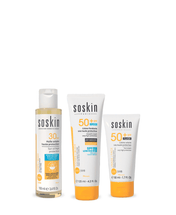


Summer is approaching and with it, the eternal dilemma: sun oil or sun cream? Between the advice of your sister-in-law who swears by her monoi oil and the recommendations of your dermatologist who advocates SPF50 cream, it's difficult to find your way. However, making the right choice is crucial to effectively protect your skin while enjoying the sun. Let's sort out the truth from the falsehood about these two types of sun protection.
Understanding sun protection is essential
Before comparing oil and cream, it is essential to understand the basics of sun protection. Because yes, protecting your skin from the sun is not just about avoiding Sunday afternoon sunburn!
The dangers of UV rays (UVA and UVB)
The sun emits two types of ultraviolet rays that reach our skin:
- UVB : responsible for sunburn, they penetrate the epidermis and stimulate the production of melanin (tanning). But be careful, they are also the main culprits of skin cancer.
- UVA : more sneaky, they penetrate deep into the dermis without causing immediate redness. They are the champions of premature skin aging and also contribute to the development of cancers.
The difference? UVB burns you, UVA ages you. In both cases, appropriate protection is essential!
What is SPF (Sun Protection Factor)?
The SPF indicates the level of protection against UVB.
Concretely:
- SPF15: blocks around 93% of UVB
- SPF30: blocks approximately 97% of UVB
- SPF50: blocks approximately 98% of UVB
Contrary to popular belief, SPF50 does not offer twice as much protection as SPF25. The difference, although real, is more nuanced than it seems.
Broad spectrum: Protect against UVA and UVB
A good sunscreen product must display the “broad spectrum” label, guaranteeing effective protection against both types of rays. This indication is as important as the SPF figure!
Solar oil: its advantages and disadvantages
Sun oil seduced by its texture and its “natural” appearance. But what about its performance?
The strong points of sunscreen oil
Pleasant texture and easy application
Impossible to deny the pleasure of applying sunscreen oil. Its fluid texture spreads easily, leaves no white marks and gives the skin an immediately attractive satin appearance. This is probably its major advantage compared to sometimes thicker creams.
Often provides hydration and radiance
Sun oils generally contain nourishing ingredients (vegetable oils, vitamins) which deeply hydrate the skin. Result: soft and luminous skin, even after exposure. A real plus for dry skin!
Water resistance (for some)
Certain formulations of sunscreen oils offer good water resistance, which is particularly useful when swimming. Be careful, however, to check this mention on the packaging, because it is not systematic.
Limitations and preconceived ideas about sunscreen oil
Protection often inferior to that of creams
First reality: most sunscreen oils available on the market have moderate SPFs (15 to 30 maximum). If you are looking for very high protection (SPF50+), you will have more choice in terms of creams.
May give a false impression of a secure tan
The immediate "good glow" effect of the oil can create a dangerous illusion. Be careful not to confuse the glow provided by the product with a real protective tan!
Risk of burns if misused
Due to their generally lower SPF and their texture which may seem "insufficient", sun oils require even more rigorous application than creams. Negligence can cost your skin dearly.
Sun cream: the reference for optimal protection
The sunscreen remains the reference solution recommended by most dermatologists. Let's see why.
The undeniable benefits of sunscreen
Wide choice of textures and high SPF
The sunscreen market offers an impressive diversity: light, fluid, thick, tinted textures... And above all, you will easily find high SPF (50+) for maximum protection. Enough to satisfy all needs!
Formulations suitable for different skin types
Oily, dry, sensitive, reactive skin with a tendency to acne... There is a sunscreen for every skin problem. Laboratories compete in ingenuity to offer increasingly sophisticated formulas.
Generally more reliable and consistent protection
Sunscreens benefit from decades of research and improvement. Their ability to form a uniform protective film on the skin is now perfectly mastered. Protection is therefore more predictable and reliable.
Potential weaknesses of sunscreen
Texture sometimes thick or “whitening”
Let's face it: some sunscreens, particularly those with high SPF, can leave a white veil on the skin or give a "mask" feeling. Fortunately, formulations are constantly improving.
Sensation on the skin varies
Depending on the formulations, some people may experience a feeling of oiliness, occlusive film or discomfort. Sometimes you have to try several products before finding the perfect one.
Debunking Common Myths
Let’s put an end to some particularly stubborn preconceived ideas!
“Sun oil makes you tan faster”
FALSE! Sunscreen oil does not make you tan faster. If it gives an immediate golden appearance, it is only thanks to its texture and sometimes to pearlizing agents. Tanning depends on your melanin production, not the type of protection used.
“Sunscreen prevents you from tanning”
FALSE! Properly used sun protection allows you to tan gradually and sustainably, avoiding sunburn which causes your tan to peel and lose your tan. It's even the opposite: it promotes a quality tan!
“A high SPF completely blocks tanning”
FALSE! Even SPF50+ allows around 2% of UVB rays to pass through, more than enough to trigger the tanning process. The difference lies in the progressiveness and security of the process.
“Monoï is enough as protection”
BE CAREFUL! Traditional monoi (fragrant coconut oil) only offers paltry protection (SPF2 to 4 maximum). It can complement sun protection for its moisturizing properties, but can in no way replace it.
Choosing between oil and cream: criteria to consider
The choice between oil and sunscreen depends on several personal factors that must be analyzed objectively.
Skin type (dry, oily, sensitive)
- Dry skin : sunscreen oil can be an excellent compromise, provided you choose a suitable SPF
- Oily skin : favor non-comedogenic fluid creams
- Sensitive skin : opt for mineral creams, which are generally better tolerated
Sunshine level and destination
The more intense the sunshine (mountains, tropics, reflection on the water), the more a high SPF is required. In these conditions, creams generally offer more choices.
The activity practiced (swimming, sport)
For intense aquatic or sporting activities, choose products resistant to water and perspiration. Always check this notice on the packaging.
Personal texture preferences
In the end, the best sunscreen product is the one that you apply conscientiously! If you hate the feeling of a cream, you're better off with an oil with a moderate SPF but applied correctly.
The importance of correct application, regardless of the product
Oil or cream, your choice will be in vain without rigorous application. Here are the golden rules to absolutely respect.
Sufficient quantity of product
The rule of dermatologists: 2 mg of product per cm² of skin, or approximately 6 teaspoons for the entire body of an adult. Yes, it seems huge, but it's the amount needed to achieve the advertised SPF!
Regular application (every two hours)
No sunscreen product is “long-lasting”. The golden rule remains application every 2 hours, and immediately after each swim or excessive sweating.
Don't forget certain areas (ears, feet)
The often neglected areas are also the most exposed to sunburn: ears, tops of the feet, nape of the neck, hairline... Be meticulous in your application!
Conclusion: The best protection is that which is applied correctly
In the sun oil vs sun cream match, there is no absolute winner. Each option has advantages depending on your profile and your needs. The cream generally remains more protective thanks to its high SPF and proven formulations. The oil seduces with its comfort of application and its nourishing properties. But remember this: the best sunscreen product will always be the one that you use correctly, in sufficient quantity and regularly. Rather than an oil left at the bottom of the bag or a cream applied sparingly, choose the product that will make you want to protect your skin. Because beyond aesthetic preferences, the issue is crucial: preserving the health and youth of your skin for years to come. So, oil or cream, make your choice carefully, and above all, never forget to apply it!