

Do you know that unpleasant feeling of tight skin after a shower? You are not alone. In fact, 37.6% of the European population suffers from reactive skin, and 20% of people are born with sensitive skin. This tight facial skin is often accompanied by redness, burning and tingling that make everyday life uncomfortable. Whether it's dry skin that feels tight in winter or skin that itches and feels tight after applying cosmetics, these skin irritations require special attention. In this article, we explore the causes of these inconveniences, how to recognize the signs of irritation, and above all, the solutions to soothe and prevent these reactions.
Why does your skin feel tight and red?
Temperature differences weaken the skin barrier: Sudden temperature variations constitute a major stress for the epidermis. When you go from an interior heated to 20°C to a freezing exterior at -5°C, these thermal shocks disrupt the skin's balance and weaken your skin's ability to regulate. The body automatically reacts to cold by reducing the diameter of blood vessels to limit heat loss. This skin vasoconstriction reduces sebum production, making the skin drier and prone to cracking.
In winter, dry ambient air causes increased evaporation of water contained in the skin. Indoor heating accentuates this phenomenon by drying out the air, creating a double assault on your skin barrier. Uncovered areas, particularly the face, suffer these attacks head on.
Dehydration intensifies tightness: Tight skin often reveals a deficiency of water rather than lipids. This sensation appears after cleansing or showering, when the altered skin barrier accelerates insensible water loss. Your hydrolipidic film, made up of sebum and sweat, is no longer able to retain moisture. Environmental factors such as cold, wind and pollution worsen this dehydration.
Aggressive products cause reactions: Some cosmetic ingredients directly attack your protective barrier. Sulfates (Sodium Lauryl Sulfate and Sodium Laureth Sulfate) strip the skin's natural oils, causing dryness and redness. Denatured alcohol evaporates surface moisture, creating tightness and itching. Perfumes often hide irritating substances that can trigger allergic reactions. Parabens and artificial colors can also irritate sensitive skin.
Underlying skin conditions: Rosacea affects the small vessels of the face and causes redness, burning and tingling sensations. Temperature changes, stress, and certain spicy foods trigger flare-ups. Seborrheic dermatitis appears as red patches accompanied by white dandruff on oily areas of the face.
Excessive cleansing aggravates irritation: Washing your face too often strips the hydrolipidic film. Hot water dilates the blood vessels and removes this protective film, causing redness and tightness. Cleaners that are too aggressive destroy the intercellular cement made up of ceramides and sterols.
Recognize the signs of irritated skin
Facial skin that feels tight after cleansing: Feeling skin discomfort immediately after cleansing your face is a red flag. This sensation of tight skin is accompanied by a loss of suppleness and sometimes slight redness. When the skin lacks water, it becomes less supple, more sensitive and more uncomfortable. This phenomenon reveals a weakened skin barrier which reacts more easily.
Redness and burning sensations: Facial redness often occurs in association with sensitive and reactive skin. Your skin feels tight, tingles, and sometimes even burns. In fact, these sensations can appear without visible redness. In this case, the discomfort results from deep dehydration or an alteration of the skin barrier. The skin becomes more permeable and reacts with feelings of heating or tingling. Red patches with irregular edges accompanied by severe itching indicate contact eczema.

Dry skin that feels tight and flaky: Tightness, lack of flexibility, tingling and scales characterize dry to very dry skin, especially after bathing or showering. When touched, the skin loses its softness in favor of roughness. Cracks and scales appear on the skin, and the complexion becomes dull. Scaly skin is recognized by its dryness, rough texture, and a feeling of discomfort with tingling, tightness and itching.
Constant itching and tingling: Itching results from the release of certain substances that the skin makes, such as histamine. Furthermore, severe itching can be accompanied by scratching lesions which risk becoming infected. This itching can also disrupt sleep and lead to fatigue. Prolonged scratching worsens the local reaction and may leave scars.
Immediately soothe tight skin
Clean with a mild, soap-free product: If tightness appears, immediately stop any suspect product. Traditional soap has a pH of up to 10.5, disrupting the natural acidity of your epidermis, whose pH is around 5. Choose a cleanser with a physiological pH which Respects skin balance. Products without strong surfactants such as Sodium Lauryl Sulfate preserve the hydrolipidic film without damaging it. A milky texture enriched with hydrating glycerin and thermal water provides lasting comfort.
Apply a thermal water compress: Thermal water soothes immediately your sensitive and irritated skin thanks to its anti-irritant properties. Soak a handkerchief in thermal water and place it on the affected area like a compress for 10 minutes. Choose a handkerchief rather than cotton, which is too absorbent. Redness, itching and tightness subside immediately after use. In fact, the tingling sensation decreases by 55% from the first application, while the sensitivity of the skin decreases by 64%. Leave to act without drying or dabbing to reinforce the penetration of the components.
Moisturize with a repair cream: Then apply a suitable treatment to help your skin repair itself. Panthenol promotes skin regeneration, glycerin attracts water and keeps it in the skin, while bisabolol has anti-irritation and anti-redness properties. These repair creams calm irritations, prevent and relieve tightness.
Avoid actions that irritate more: Never rub your skin when removing makeup. Dry your face by dabbing a soft towel without dragging it. Furthermore, protect your skin from the sun with sunscreen very high protection.
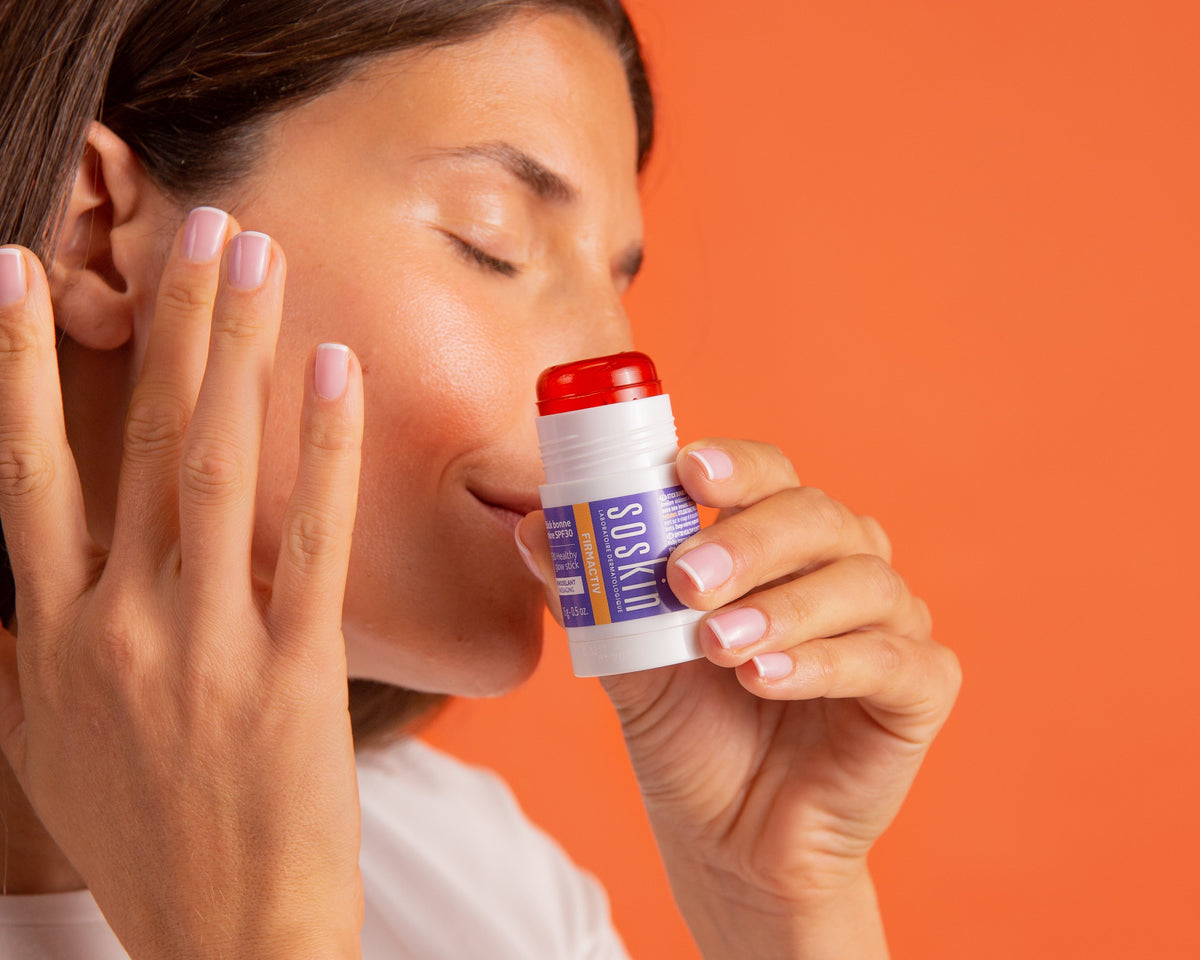
For the areas most exposed to friction: hands, eye contour, folds, sides of the nose - the SOSKIN Barrier Stick offers a practical SOS gesture to reapply as many times as necessary. Its non-greasy texture forms a protective film with a 'second skin' effect, invisible and comfortable, which helps restore the hydrolipidic film while limiting redness and itching. Suitable for the whole family from birth, including the eye area, it ideally complements the daily soothing routine.

Prevent tightness and redness on a daily basis
Adopt a suitable skincare routine: Stabilizing your tight skin requires a consistent daily approach. Clean your face morning and evening with a product adapted to your skin type to eliminate accumulated impurities and pollution residues. Permanent hydration remains essential: apply a moisturizing cream after each cleansing. Day care acts as a shield against the attacks that the skin undergoes throughout the day. At night, your skin regenerates and cell renewal takes place during sleep. A minimalist routine is best suited to sensitive skin: a gentle cleanser, moisturizer and sun protection in the morning are enough.
Protect your skin from external aggressions: Heating and air conditioning create a lack of humidity which promotes skin dehydration. You can solve this problem with an air humidifier. Photoprotection blocks only 55% of free radicals generated by UVA and UVB rays. At the same time, UVA rays continually attack the skin in summer and winter. Apply sun protection to the face daily in all seasons.
Choose cosmetics without perfume or alcohol: Fragrance-free cosmetics significantly reduce the risk of inflammation and daily skin discomfort. Hypoallergenic products favor refined compositions, without synthetic fragrances, without irritating preservatives and without artificial colors. These formulations are suitable for the whole family, from the youngest to the oldest.
Maintain good hydration from the inside: Drinking between 1.5 and 2 liters of water per day maintains the elasticity and resistance of your skin. Choose a diet rich in water: cucumber, salad, zucchini, tomato, watermelon, melon, berries and citrus fruits. Omega-3 and omega-6 essential fatty acids strengthen the hydrolipidic film and retain water in the tissues. Vitamins C and E protect the skin and stimulate collagen production.
Skin that feels tight and red requires a two-pronged approach: soothe the immediate irritation and prevent recurrence. In fact, you can quickly soothe your skin with gentle treatments and thermal water, then build a suitable routine to strengthen your skin barrier. Avoid aggressive products, protect yourself from external aggressions and hydrate properly. Your skin will regain comfort and balance in a few days.
Does your skin still feel tight despite a suitable routine?
Take stock in 3 minutes with our personalized skin diagnosis, and receive a tailor-made routine for your skin type.