

In the world of dermocosmetics, few assets display a CV as impressive as vitamin C. Recognized worldwide, this ingredient is the keystone of any strategy anti-aging and effective shine. However, its delicate and unstable nature has long been a challenge for formulators.
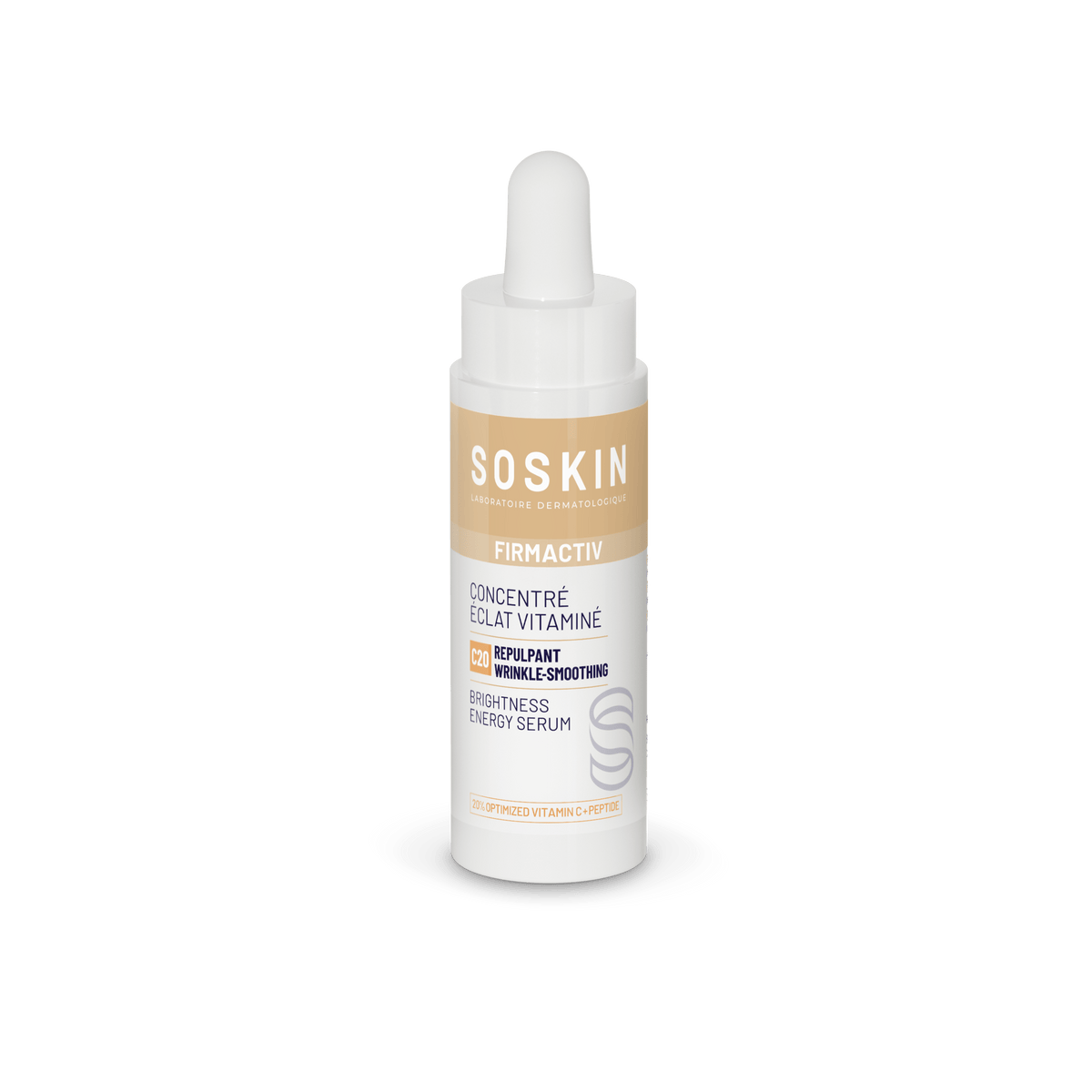
Today, thanks to technological advances, we no longer only talk about vitamin C, but optimized vitamin C. More powerful, more stable and more bioavailable, this new generation of active ingredient promises increased effectiveness to target loss ofcomplexion radiance, signs of aging and environmental aggressions.
Find out why optimized vitamin C is the key ingredient your beauty routine demands.
What is Optimized Vitamin C?
The most famous and most studied form of vitamin C isL-ascorbic acid (LAA). Although it is extremely effective, it is also very sensitive to light, air and heat, which makes it fragile in cosmetic formulations.
Optimized vitamin C refers to improved and stabilized forms of this active ingredient, designed to preserve its integrity until absorption by the skin. This includes:
- Stabilized Derivatives : Molecules like Ascorbyl Glucoside or Ethyl-Ascorbic Acid, less sensitive to oxidation, which transform into L-ascorbic acid once applied to the skin.
- Encapsulated Formulations : Cutting-edge technologies that “protect” pure L-ascorbic acid in an envelope (liposomes, microspheres) in order to gradually and effectively release it into the skin layers.
By choosing an optimized vitamin C, you opt for the power of the active ingredient without the disadvantages of its instability.
Multiple Benefits for the Skin: Radiance, Firmness and Antioxidant Protection
Optimized vitamin C acts on three fundamental pillars of skin health and youthfulness, making it a must for tired and mature skin:
1. A Spectacular Complexion Radiance
Vitamin C is a potent inhibitor of tyrosinase, the enzyme responsible for melanin production. It thus helps to correct pigment spots and prevent their appearance. At the same time, it instantly revives radiance by neutralizing oxidative stress which dulls the complexion. The result? A more even skin texture and a visibly brighter complexion.
2. An Anti-Aging and Firming Action
As an essential cofactor, vitamin C plays a key role in the collagen synthesis. By stimulating its production, it contributes to improving the firmness of the skin, to reduce the appearance of wrinkles and fine lines, and to redensify the skin's mattress. It's an action anti-aging global and preventive.
3. High Performance Antioxidant Protection
At the heart of its effectiveness, vitamin C is one of the most powerful antioxidants. It neutralizes free radicals generated by external aggressions (pollution, UV, blue light), these factors responsible for premature aging. It acts as a real protective shield.
Why Choose a Stabilized and Encapsulated Vitamin C?
Stability is the criterion that separates a simple formula from a highly effective dermocosmetic treatment.
Stability = Maximum Efficiency
Unstabilized vitamin C can oxidize within a few weeks after opening, becoming ineffective or even pro-oxidant. Optimized forms, such as those chemically stabilized or encapsulated, guarantee that the active ingredient remains intact and delivers its optimal concentration until the last drop of the product.
Improved Tolerance
TheL-ascorbic acid pure, especially in high concentrations, can sometimes irritate sensitive skin. Optimized shapes and progressive release systems encapsulated are often better tolerated, because they limit the peak concentration of the active ingredient during application, ensuring a gentle but deep action.
How to Integrate Vitamin C into Your Beauty Routine?
Optimized vitamin C is generally formulated in serum, because this format allows a high concentration to be achieved.
-
In the Morning, Absolutely: Vitamin C should be applied in the morning, after cleansing and before moisturizer. This is when its antioxidant and protective action is most relevant, to defend the skin against the day's aggressions.
-
Order of Application: Vitamin C serum (on dry skin) Additional serum(s) Moisturizing Cream Sunscreen.
Directions for Use and Precautions
1. Absolute Photoprotection
Although vitamin C is not photosensitizing (it is even photoprotective), it in no way replaces your sunscreen. It is imperative to apply a SPF30 minimum each morning to capitalize on its antioxidant protection and prevent UV damage.
2. Avoid Oxidation
If your serum changes color (from clear/very pale yellow to dark orange or brown), it has oxidized. It is then preferable to replace it. This is why opaque or airless bottles are preferred.
3. Tolerance Test
If you have sensitive skin, start with a lower concentration (5% to 10%) before moving to more concentrated formulas (15% to 20%).