

With the start of the school year, our habits change: return to the office, resumption of studies, and above all… massive exposure to screens. Smartphones, computers, tablets: these everyday companions emit blue light which is of increasing concern to dermatologists. For what ? Because this invisible light could well be the new skin aging factor of our digital age.
If you thought your skin was only at risk outdoors, think again. Blue light penetrates everywhere and represents a unique beauty challenge. But don't panic: understanding this phenomenon and adopting the right reflexes can make all the difference in preserving the radiance of your complexion.
What is blue light and why is it an issue at the start of the school year?
Blue light, also called HEV (High Energy Visible) light, is part of the visible light spectrum. It is characterized by short waves and high energy, which gives it particularly strong penetration power into skin tissues.
Sources of exposure: from the sun to our screens
Contrary to popular belief, the sun remains the main source of blue light to which we are exposed. However, our screens (smartphones, computers, televisions, LEDs) also emit this light, certainly in smaller quantities, but in a prolonged and close manner.
This proximity changes everything: where the sun exposes us at a distance and intermittently, our digital devices literally bombard our faces from a few centimeters away, sometimes for more than 10 hours a day. This chronic exposure is increasingly worrying specialists.
The “re-entry” effect: the return to digital overexposure
In summer, we alternate between outdoor activities and moments of relaxation. But from September, it's a return to reality: whole days in front of the computer, trips checking your phone, evenings in front of the screens.
This sudden intensification of our exposure to artificial blue light often coincides with the appearance of the first signs of skin fatigue. Dull complexion, loss of radiance, small imperfections: what if it was linked to this digital overexposure?
What are the concrete effects of blue light on the skin?
Research into the impact of blue light on the skin is still recent, but the first results are worrying. The identified mechanisms reveal effects similar, or even complementary, to those of UV.
Acceleration of skin aging (oxidative stress)
Blue light penetrates deeper into the skin than UVB and reaches the dermis. It generates free radicals which attack skin cells and degrade collagen and elastin, these proteins essential to the firmness and elasticity of the skin.
This oxidative stress accelerates the natural aging process: wrinkles, fine lines and loss of tone appear prematurely. More insidious than damage caused by the sun, this effect accumulates day after day, without us being aware of it.
The appearance of pigment spots and a dull complexion
Recent studies show that blue light can stimulate melanin production, particularly in dark and olive skin. This hyperpigmentation results in the appearance of brown spots, particularly on the face and hands.
Furthermore, prolonged exposure to screens disrupts skin microcirculation. Result: the complexion loses its radiance, becomes grayish and dark circles deepen. This “tired look” effect is now recognized as one of the most visible signs of digital overexposure.
The weakening of the skin barrier
Blue light also alters the skin's barrier function by disrupting the production of protective lipids. This weakening makes the skin more sensitive to external aggressions and promotes dehydration.
Sensitive and reactive skin is particularly vulnerable: redness, tightness and feelings of discomfort can intensify with exposure to screens.
How to implement an effective protection strategy?
Faced with these new challenges, it is essential to adapt your beauty routine. A three-step approach creates a true protective shield against blue light.
Step 1: Adapt your skincare routine with “shield” active ingredients
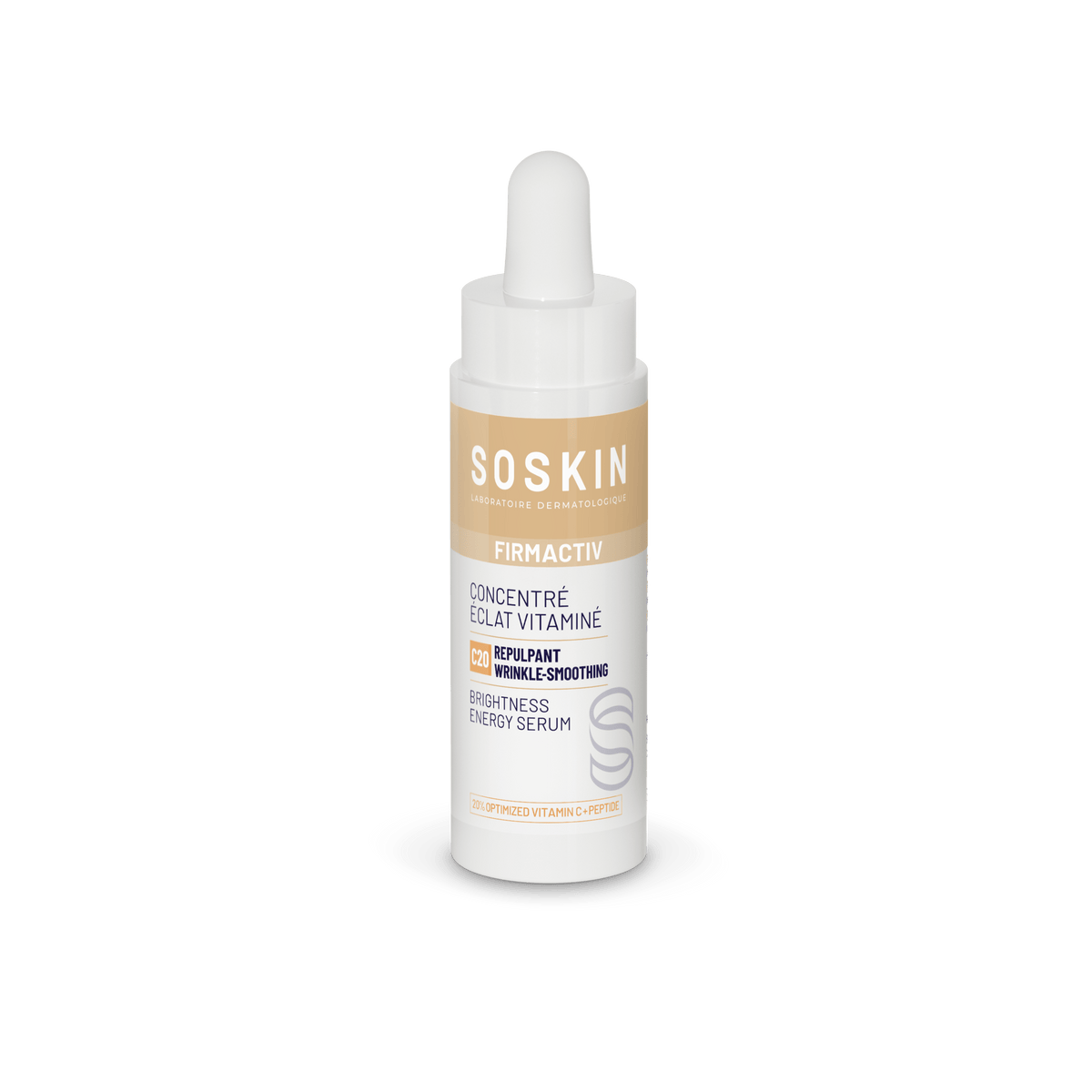
The first line of defense is integrating specific active ingredients into your daily routine. Antioxidants become your best allies: vitamin C in the morning to neutralize free radicals, niacinamide to strengthen the skin barrier, vitamin E for its protective properties.
Choose concentrated serums that penetrate quickly and can be applied under your sun protection. A simple but effective routine: gentle cleansing, antioxidant serum, moisturizer and UV protection.
Step 2: Use sun protection, even indoors
It's THE beauty revolution of recent years: wearing sunscreen even when you're not going out. The new “indoor” formulas are specially designed to filter blue light while remaining pleasant to wear every day.
Go for clues SPF 30 minimum with new generation mineral or chemical filters. These hybrid protections offer broad spectrum defense including UVA, UVB and visible blue light.
Step 3: Adopt good daily actions (screen filters, breaks)
Beyond care, a few simple actions significantly reduce your exposure:
- Install anti-blue light filters on your screens or activate “night” mode permanently
- Follow the 20-20-20 rule: every 20 minutes, look at a point 20 meters away for 20 seconds
- Maintain a distance of at least 50 cm from your computer screen
- Limit screen use 2 hours before bed
The star ingredients to favor in your anti-blue light treatments
For optimal protection, certain active ingredients have proven themselves against the harmful effects of blue light. Focus on the essentials to integrate into your routine.
Antioxidants (Vitamin C, Niacinamide, Vitamin E)
The vitamin C remains the reference antioxidant. In the form of L-ascorbic acid or more stable derivatives (magnesium ascorbyl phosphate), it effectively neutralizes free radicals generated by blue light. Ideal concentration: 10 to 20% depending on your tolerance.
The niacinamide (vitamin B3) deserves a pride of place in your anti-blue light arsenal. At 5-10%, it strengthens the skin barrier, regulates sebum production and reduces pigment spots. Its advantage: excellent tolerance, even on sensitive skin.
The vitamin E (tocopherol) potentiates the action of vitamin C while offering its own protective properties. Look for formulas that combine these two vitamins for maximum synergistic effect.
Mineral filters (Zinc Oxide, Titanium Dioxide)
New generation mineral filters provide physical protection against blue light. Thezinc oxide and the titanium dioxide micronized products create a real screen on the surface of the skin without leaving white marks.
These filters have the advantage of being photostable and not generating free radicals, unlike certain chemical filters. Ideal for sensitive and reactive skin that particularly suffers from exposure to screens.
Specific plant extracts (cocoa, green tea, etc.)
Nature is full of protective active ingredients. Thecocoa extract contains flavonoids which strengthen the skin's natural defenses against oxidative stress. Its richness in antioxidants makes it a valuable ally against blue light.
The green tea (Camellia sinensis) provides its protective polyphenols, notably EGCG, known for its anti-inflammatory and antioxidant properties. It helps prevent cellular damage and maintains the integrity of the skin barrier.
Other extracts are appearing in anti-blue light formulas: ginkgo biloba for microcirculation, blueberry extract for its protective anthocyanins, or even astaxanthin, a particularly powerful marine antioxidant.
The start of the school year often marks a new beginning, the perfect opportunity to rethink your beauty routine in the face of the challenges of our digital age. Protecting your skin from blue light is no longer an option but a necessity to preserve the youth and radiance of your complexion.
By adopting a global approach - adapted care, daily protection and good digital habits - you give your skin the best weapons to resist everyday aggressions. Because after all, beautiful skin means protected skin!