

The benefits of vitamin C for the skin are numerous and scientifically proven. It acts as a catalyst in the collagen formation process, improving not only the quality but also the quantity of collagen produced in our body. Thus, the link between vitamin C and collagen is fundamental to preserve skin youth. We need a recommended dietary allowance of 110 mg per day because our bodies do not naturally produce this vitamin. In addition, our environment directly affects our reserves - know that a single cigarette destroys up to 5 mg of ingested vitamin C. In this article, we'll explore how to make the most of this miracle vitamin to boost your collagen naturally and transform your beauty routine.
Why vitamin C is essential for your skin
Vitamin C, also known as ascorbic acid, is not just an ordinary dietary supplement. This molecule plays a fundamental role in the health of our skin, with benefits that go far beyond simple nutritional intake.
A nutrient that the body does not produce
Unlike many animals, the human body is incapable of synthesizing vitamin C. This particularity results from a genetic mutation that occurred during our evolution. Our body can neither produce nor store it sustainably, which makes its daily intake essential. Without this regular intake, we risk developing a deficiency which can directly affect the quality of our skin. Indeed, a balanced diet and the use of topical care products become our main sources to benefit from its skin benefits.
A key role in skin health
Vitamin C plays a central role in the synthesis of collagen. It acts as an essential enzymatic cofactor that transforms collagen into long threads from its constituent elements. This structural protein is fundamental to maintaining the firmness and elasticity of our skin. Furthermore, ascorbic acid is a powerful antioxidant that protects our cells against free radicals generated by UV rays, pollution and stress. These environmental attacks accelerate skin aging when they are not neutralized. In addition, vitamin C helps prevent and reduce the appearance of dark spots by inhibiting tyrosinase, an enzyme involved in the excessive production of melanin.
Differences between dietary and topical vitamin C
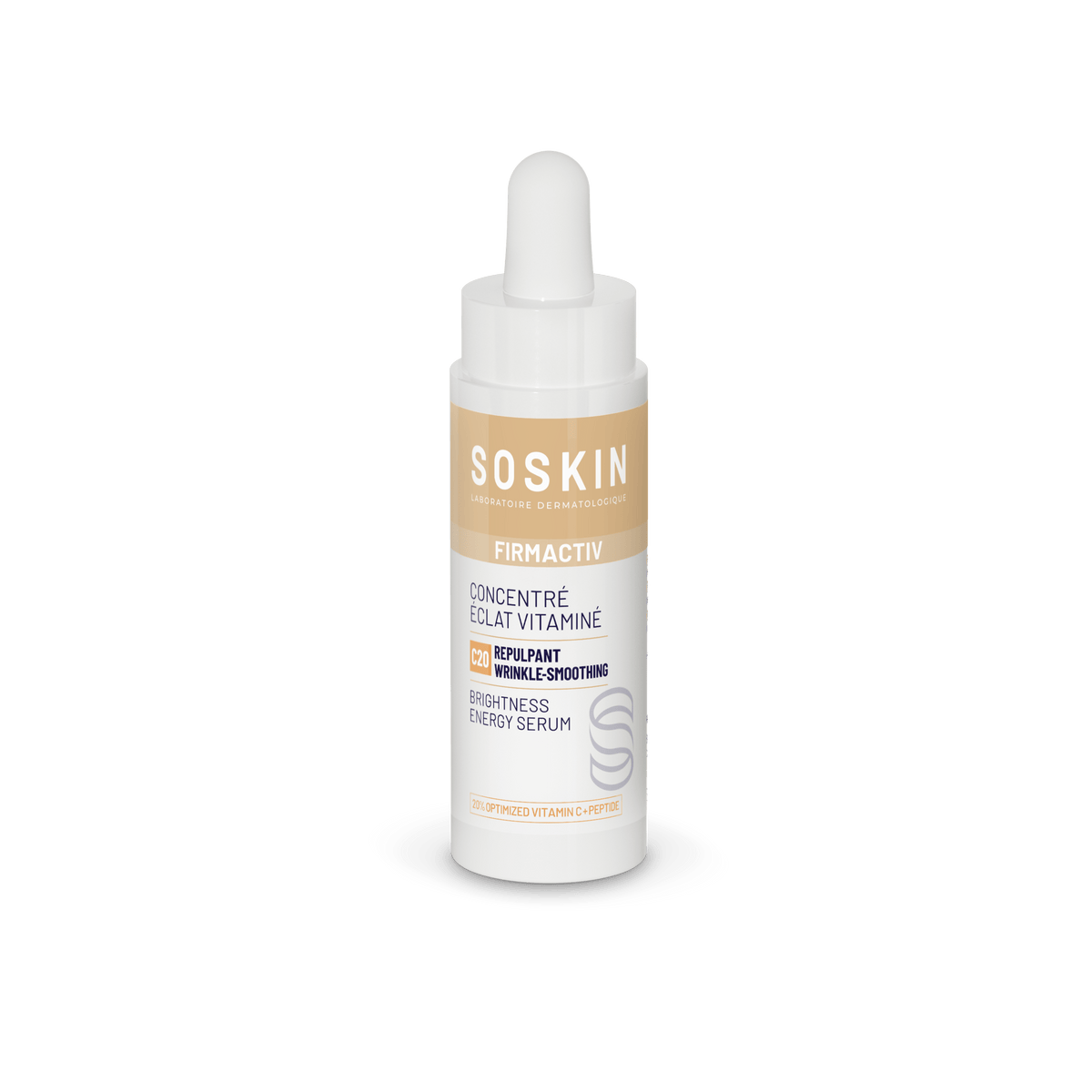
Although diet is essential for our overall health, studies show that only a third of the vitamin C ingested actually reaches our skin. To maximize its skin benefits, dermatologists therefore recommend topical application in the form of a serum. This method allows for more direct absorption and optimal effectiveness. While citrus fruits, kiwis and red peppers are excellent food sources, their benefits for the skin remain limited compared to cosmetic formulas. Topical treatments based on stabilized vitamin C offer targeted action, precisely where your skin needs it, to effectively stimulate collagen production and protect against daily aggressions.
Thus, to fully benefit from the collagen and vitamin C duo, a combined approach between balanced diet and appropriate care proves to be the most effective strategy for healthy, glowing skin.
How Vitamin C Naturally Boosts Collagen
Collagen constitutes the invisible skeleton that supports our skin. This structural protein, which represents approximately 30% of the proteins in our body, plays a fundamental role in maintaining a youthful and radiant appearance. Let's see how vitamin C masterfully orchestrates its production.
The role of collagen in skin firmness
Collagen is the most abundant protein in our body. This structural protein isn't just there - it's essential for maintaining skin firmness and elasticity. Unfortunately, its natural production decreases with age, especially after the age of 40, when we lose around 2% of our collagen each year. This gradual reduction leads to visible changes: sagging skin, thinner and more fragile skin, slowed healing and increased dehydration. This is precisely where vitamin C comes in as a valuable ally.
Vitamin C as an enzymatic cofactor
The magic of vitamin C lies in its role as an irreplaceable enzymatic cofactor. Concretely, it activates two specific enzymes - prolyl-hydroxylase and lysyl-hydroxylase - which transform the amino acids proline and lysine into hydroxyproline and hydroxylysine. These molecular transformations are crucial because they allow collagen to structure itself correctly, thus forming robust fibers that strengthen our skin tissues. Without this precise action, collagen becomes unstable, which significantly accelerates the signs of aging.
Reduction of wrinkles and improvement of elasticity
By stimulating the production of collagen, vitamin C provides visible and measurable benefits. Several clinical studies show that after a few weeks of regular use, a significant reduction in wrinkles is observed: reduction in their visibility, depth and surface area. Furthermore, by increasing collagen synthesis, vitamin C re-densifies and smoothes the skin surface, thus preventing sagging of the skin. It gives it a plumped appearance and beautiful natural elasticity. In addition, this action is particularly beneficial in the context of photoaging, where we generally observe a loss of elasticity and a reduction in skin thickness due to solar exposure.
Other benefits of vitamin C for the skin
Beyond its role in collagen synthesis, vitamin C offers a multitude of other benefits for our epidermis. Let's discover together these extraordinary properties which make it an essential ingredient in our beauty routine.
Antioxidant protection against external aggressions
Vitamin C constitutes a powerful shield against oxidative stress. Indeed, our skin faces daily UV rays, pollution, temperature variations and stress—all factors generating free radicals which attack our cells. When these unstable molecules proliferate, they accelerate the skin aging process and dull the complexion. Thanks to its antioxidant properties, vitamin C effectively neutralizes these free radicals, thus protecting the integrity of skin cells and strengthening the skin barrier.
Reduction of pigment spots
Vitamin C plays a crucial role in regulating melanin. Furthermore, it acts directly on tyrosinase, an enzyme involved in the synthesis of this pigment responsible for brown spots. By inhibiting this enzyme, it not only prevents the appearance of new spots but also contributes to the reduction of existing spots. Clinical studies have shown that after six weeks of use, the intensity of brown spots decreases by 45%.
Unification of complexion and natural radiance
A dull complexion is often the result of an accumulation of dead cells and prolonged exposure to environmental aggressions. Thus, vitamin C stimulates cell renewal, accelerating the regeneration of the epidermis. This action combined with its depigmenting effects provides a visibly more even and radiant complexion. Clinical tests reveal that skin radiance and luminosity increase by 44% after six weeks of regular use. In addition, 97% of women notice a more radiant and even complexion after just two weeks.
Vitamin C, much more than a simple complement to the production of collagen, is therefore essential as a complete active ingredient to preserve the youth and natural beauty of our skin.
Integrate vitamin C into your beauty routine
To take full advantage of the relationship between collagen and vitamin C, it is essential to correctly integrate the latter into your daily beauty routine. Here's how to optimize its use for visible results.
Choosing treatments based on stabilized vitamin C
The stability of vitamin C is essential for its effectiveness. Choose formulas containing stabilized derivatives such as ascorbyl glucoside or magnesium ascorbyl phosphate, which are better tolerated by sensitive skin. The ideal concentration is between 10% and 20% for optimal penetration into the epidermis. Always store your products in a cool place and away from light to preserve their properties.
When and how to apply vitamin C serum
Contrary to popular belief, morning is the ideal time to apply vitamin C, thus creating an antioxidant shield against daily aggressions. On clean, dry skin, apply 4 to 5 drops to the face and neck, avoiding the eye area. Allow to absorb before continuing with your moisturizer.
Combine with sun protection
The vitamin C and sun protection duo is essential. Indeed, although vitamin C is not photosensitizing, applying an SPF of at least 30 is essential to maximize its benefits. This combination forms complete protection against the signs of aging.
Combine with other active ingredients such as hyaluronic acid
Hyaluronic acid and vitamin C form a perfect alliance with no contraindications. For optimal effectiveness, apply your vitamin C serum first, then the hyaluronic acid serum. This synergy plumps the skin while stimulating collagen. On the other hand, avoid combining vitamin C with retinol or powerful exfoliating acids in the same routine.
Conclusion
Vitamin C therefore asserts itself as a precious ally in our quest for healthy and radiant skin. Indeed, this miraculous molecule not only stimulates collagen production, it also offers remarkable antioxidant protection while evening out our complexion. As our body cannot produce or store this essential vitamin, daily intake becomes essential to maintain firm and elastic skin.
Certainly, eating a diet rich in fresh fruits and vegetables is a fundamental first step. However, topical treatments based on stabilized vitamin C are essential to maximize the benefits directly on our epidermis. The judicious combination of this vitamin with other active ingredients such as hyaluronic acid, as well as appropriate sun protection, further potentiates its rejuvenating effects.
Over time, the results become visible: reduced wrinkles, reduced pigment spots and a brighter complexion. Without doubt, the collagen and vitamin C duo represents one of the best natural strategies for preserving skin youth. We can now incorporate this knowledge into our daily beauty routine, knowing that science supports the effectiveness of this precious nutrient.
Natural beauty is ultimately based on simple but scientifically proven principles. Vitamin C, through its multiple action on our skin, fully deserves its reputation as a star ingredient in cosmetics. Its secret lies in its unique ability to strengthen the very architecture of our skin, thus offering us beauty capital preserved against the effects of time.