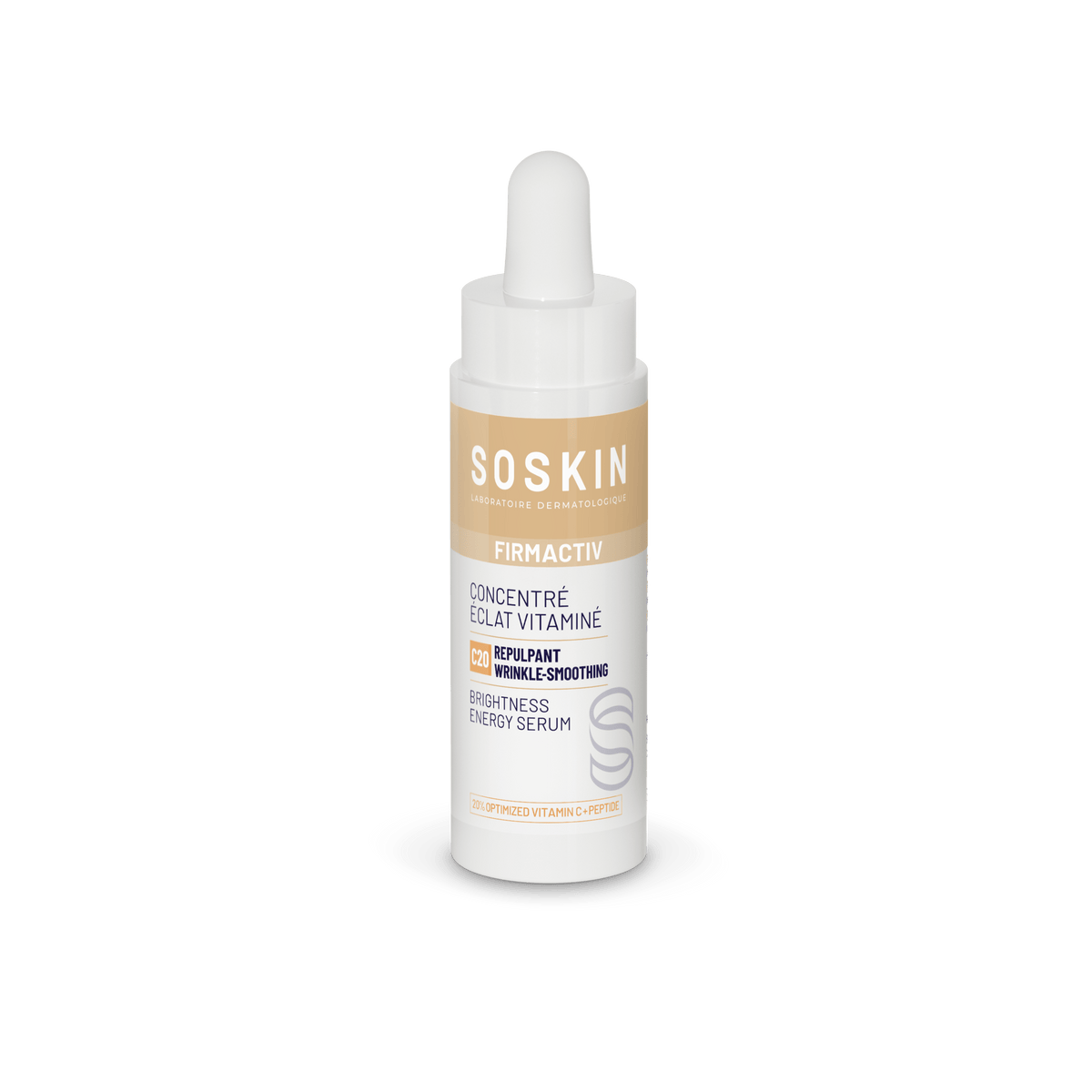


Lactic acid for the skin represents an effective and gentle solution that we highly recommend. This water-soluble alpha-hydroxy acid (AHA) is particularly recognized for its exfoliating and hydrating properties. Indeed, unlike mechanical exfoliants, it offers gentle but powerful chemical exfoliation, while helping the skin retain its hydration. It also helps maintain the skin's slightly acidic pH, strengthening its natural moisture barrier.
In this article, we'll explore why your complexion appears dull, how lactic acid can become your best ally in regaining radiance and vitality, and the best ways to incorporate it into your daily beauty routine.
Why your complexion looks dull and tired
The mirror doesn't lie. When your skin lacks radiance, several biological mechanisms are involved. Understanding these factors is essential to regain a luminous and fresh complexion.
Accumulation of dead cells
Our skin is constantly renewing itself. Every day, we lose between 30,000 and 40,000 skin cells per minute, or around 50 million dead cells daily. However, when these cells do not shed naturally, they form a layer that impairs the reflection of light on the skin. This phenomenon, called hyperkeratinization, is characterized by an abnormal thickening of the stratum corneum. Without regular exfoliation, your complexion becomes uneven and dull.
Lack of hydration
Well-hydrated skin naturally reflects light. Conversely, dehydration disrupts barrier function and causes visible discomfort. Our epidermis normally contains 15% water and functions as a reservoir from which other organs draw. When this water evaporates too quickly (a phenomenon called Insensible Water Loss), the skin loses its elasticity and luminosity. Result: a complexion that appears wrinkled and dull.
Oxidative stress and pollution
Dull complexion is mainly due to oxidative stress. This phenomenon occurs when free radicals, unstable molecules, attach to skin cells, breaking their molecular chains. Several external factors aggravate this process: air pollution deposits harmful particles on the skin, while tobacco and UV rays increase the production of free radicals. Furthermore, these attacks disrupt the synthesis of melanin, causing pigmentary irregularities which further dull the complexion.
Slowing of cell renewal
With age, the cell renewal cycle lengthens considerably. If in a young adult this process takes around 28 days, it can reach 50 days in older people. This slowdown is visible from the age of 25 and is accompanied by a reduction in the effectiveness of antioxidant enzymes. As a result, blood and lymphatic microcirculation slows down, waste is less eliminated, and the skin struggles to oxygenate.
Faced with these multiple challenges, lactic acid for the skin represents a particularly suitable solution, because it acts simultaneously on several of these factors.
Lactic acid for the skin: a multifunctional ally
Among the active ingredients available in cosmetics, lactic acid stands out for its remarkable versatility. This alpha-hydroxy acid (AHA), naturally present in fermented milk, offers multiple benefits which make it a great ally against dull complexion.
Gentle exfoliation without irritation
Lactic acid has a particular molecular structure with a larger size than other AHAs such as glycolic acid. This characteristic allows it to penetrate the skin more slowly and less deeply. In fact, it mainly acts on the intercellular connections of the stratum corneum, delicately dissolving the cement which holds the dead cells together. Its pH is also closer to that of the skin, which considerably reduces the risk of irritation, even for sensitive skin.

Hydration and water retention
Contrary to popular belief, lactic acid does not dry out the skin. On the contrary, it belongs to the category of natural humectants. This property gives it the ability to attract water and retain it in the upper layers of the epidermis. In addition, lactic acid stimulates the production of ceramides, these essential lipids which strengthen the skin barrier and prevent dehydration. Your skin thus remains comfortably hydrated, a fundamental condition for a radiant complexion.
Collagen stimulation
With age, natural collagen production gradually decreases. Lactic acid intervenes by stimulating fibroblasts, these cells responsible for the synthesis of collagen and elastin. In addition, it promotes cell renewal, accelerating the natural cycle which slows down over time. This dual action helps improve skin firmness and elasticity, gradually restoring bounce to your tired skin.
Improved skin tone uniformity
Lactic acid also acts on hyperpigmentation by inhibiting tyrosinase, an enzyme involved in the production of melanin. This lightening action naturally evens out the complexion without damaging it. Simultaneously, improving skin texture through exfoliation and hydration, it optimizes the reflection of light on the epidermis, instantly restoring lost radiance.
How to use lactic acid properly every day
To maximize the benefits of lactic acid without irritating your skin, a methodical approach is required. Now that you know its properties, let's see how to effectively integrate it into your routine.
Start with a low concentration
The initiation to lactic acid must be progressive. I recommend starting with products containing 5% lactic acid, especially if you have sensitive skin. This concentration allows the epidermis to slowly get used to the ingredient while providing visible results. After a few weeks of use without adverse reactions, you may eventually be able to move on to more concentrated formulations (8-10%).
A practical tip: apply your product in the evening to clean, dry skin, avoiding the eye and lip area.
Avoid aggressive combinations
Lactic acid for skin works best solo. Combined with other exfoliating acids like glycolic or salicylic acid, it can cause excessive sensitization. Likewise, avoid using it simultaneously with retinoids or pure vitamin C.
However, certain combinations prove beneficial. For example, lactic acid pairs perfectly with hydrating ingredients like hyaluronic acid or panthenol, which counteract its slightly drying potential.
Adapt the frequency according to skin type
For normal to combination skin, application two to three times per week generally provides excellent results. On the other hand, if your skin is dry or sensitive, limit use to once a week initially.
Pay attention to the signals from your skin: persistent redness, tightness or flaking indicate a need to space out applications. Conversely, the absence of results after several weeks may justify an increase in frequency or concentration.
Use sun protection
The use of lactic acid in the skin makes it more photosensitive. In fact, by refining the stratum corneum, it reduces the natural protection against UV rays. Daily application of sun protection (SPF 30 minimum) therefore becomes imperative, even on cloudy days.
Ideally, focus on lactic acid treatments in the evening, then consistently apply your sunscreen the next morning to maximize benefits while minimizing risks.
What to avoid so as not to aggravate skin fatigue
Despite its many benefits, using lactic acid incorrectly can worsen an already tired complexion. Here are the crucial mistakes to avoid.
Over-exfoliation and irritation
Excitement over quick results can cause us to use lactic acid too frequently. This over-exfoliation weakens the skin barrier, causing redness and burning sensations. A telltale sign? Your skin becomes shiny but tight, almost translucent. Limit application to 2-3 times per week maximum, even if your skin seems to tolerate the product well.
Use of incompatible products
Lactic acid for the skin does not mix well with certain active ingredients. Particularly avoid combining it with retinoids, pure vitamin C or other AHAs in the same routine. These combinations significantly increase the risk irritation and awareness. Space out the use of these ingredients by at least 24 hours.
Ignoring Signs of Sensitivity
Persistent tingling, tightness, or excessive flaking are not normal. These symptoms indicate that your skin is unable to adapt to lactic acid. Immediately suspend use until completely normalized, then resume at lower concentration or reduced frequency.
Neglecting hydration after use
Lactic acid skin requires imperative moisturizing follow-up. Without this step, the newly revealed cells risk becoming dehydrated, paradoxically worsening the dullness of the complexion. Choose nourishing formulas without perfume or alcohol, ideally enriched with ceramides or hyaluronic acid.
Conclusion
Lactic acid therefore represents much more than a simple cosmetic ingredient. This powerful ally truly transforms dull skin by giving it radiance and vitality. Thus, its multidimensional action simultaneously combats several causes of skin fatigue - the accumulation of dead cells, dehydration, oxidative stress and cellular slowing down.
However, its effectiveness depends greatly on judicious use. Start with low concentrations, avoid risky combinations with other acids, and adapt the frequency of application according to your skin type. Furthermore, never forget daily sun protection which becomes essential.
Some results appear quickly after a few applications. The skin regains its natural luminosity, its texture is refined and its hydration improves. However, deeper benefits like stimulating collagen and evening out skin tone require regular use over several weeks.
In the end, we recommend lactic acid as a solution particularly suitable for dull and tired skin. Unlike other potentially irritating active ingredients, its relative gentleness makes it an accessible choice even for sensitive skin. Simply listen to the reactions of your skin, adjust your routine accordingly, and your mirror will soon reflect the image of a fresh, healthy-looking complexion.