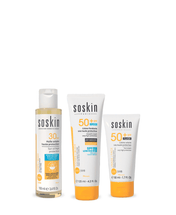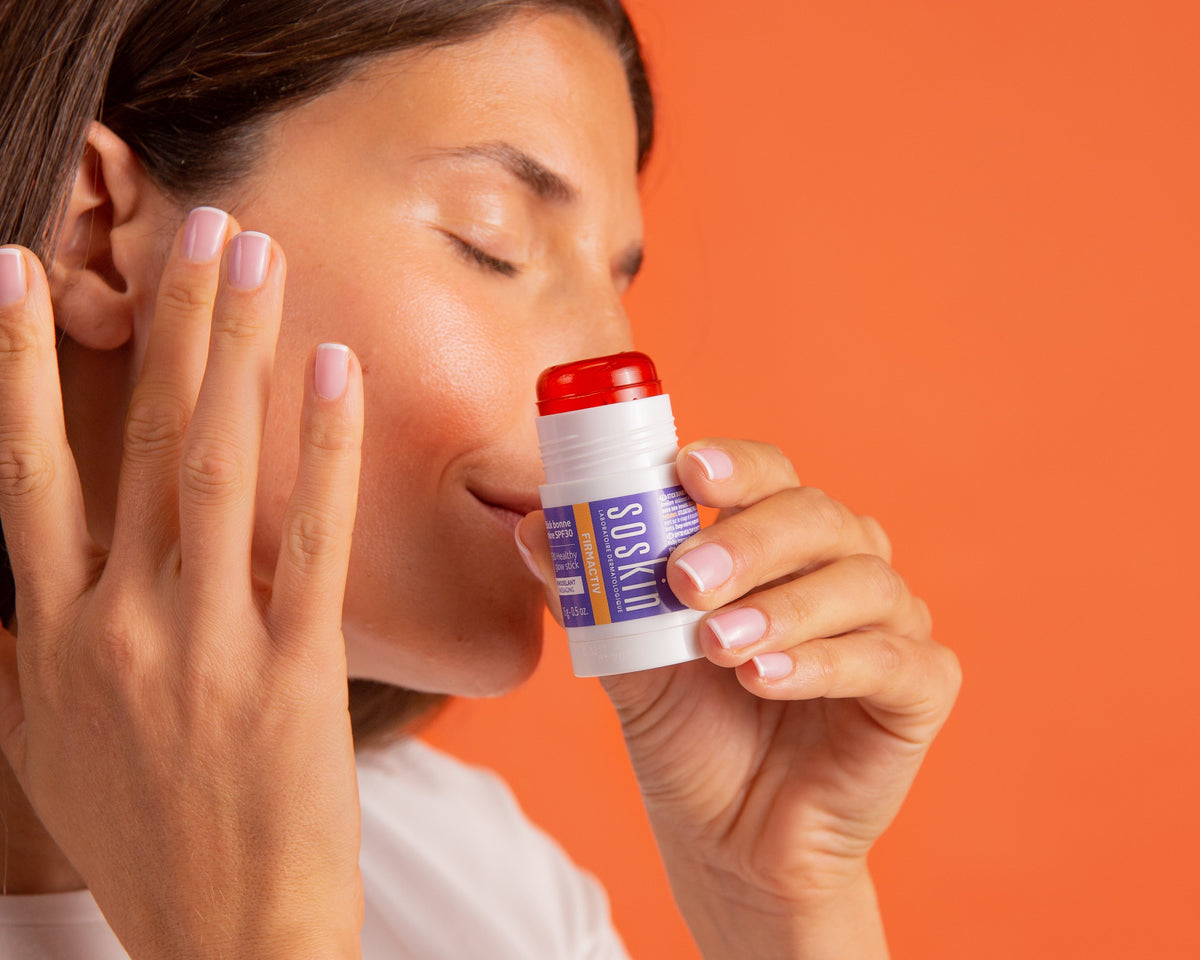


Facial brown spots often appear after summer, even if you thought you had protected your skin well. Indeed, exposure to the sun is the primary cause of hyperpigmentation, affecting in particular 10 to 15% of pregnant women and 10 to 25% of women using oral contraception. UVA and UVB cause photoaging and oxidative stress which promote these brown spots on the face. In this guide, we show you how to prevent them step by step, by combining sun prevention and appropriate depigmenting treatments.
Understanding Brown Spots After Summer
The role of UVA and UVB in hyperpigmentation

UVA and UVB rays act differently on your skin, but both contribute to facial dark spots. UVA penetrates deep into the dermis where it damages collagen, while UVB primarily affects the epidermis. UV exposure is responsible for approximately 80% of visible signs of facial aging. UVA passes through clouds and even glass, meaning you're exposed even indoors or on overcast days.
When ultraviolet rays reach skin cells, they are absorbed by endogenous photosensitizing molecules such as cytochromes and riboflavin. These excited molecules react with oxygen to generate reactive species, including superoxide anion and singlet oxygen. These free radicals then disrupt melanin synthesis pathways, triggering irregular pigment production which leads to the appearance of brown spots on the face.
Photoaging and oxidative stress
Oxidative stress manifests itself quickly after sun exposure. Free radicals appear on the skin within 15 minutes of UV exposure, with increased amounts of reactive oxygen species continuing for up to 60 minutes after exposure. Therefore, even brief exposure triggers this destructive process.
These free radicals overactivate the breakdown of collagen and elastin when exposure is too strong or too long. Oxidative stress acts as a true intracellular messenger that stimulates melanogenesis. Nitrogen radicals, particularly nitric oxide produced by keratinocytes exposed to UV rays, activate the α-MSH/MC1R pathway and tyrosinase, the key enzyme in melanin synthesis.
The disorganization of melanocytes which gives rise to the appearance of brown spots is directly attributed to the action of free radicals. In addition, 90% of skin aging is due to external factors such as the sun, pollution and tobacco. Pollution also increases dangers by inducing oxidative stress, damaging cellular structures and depleting the skin's natural antioxidants, leading to hyperpigmentation and loss of collagen.
Types of spots: solar lentigos and skin inflammation
Solar lentigos, also called age spots, appear mainly on exposed areas like the face, hands and décolleté. Unlike age spots which appear gradually with age, sun spots are directly linked to the intensity and frequency of sun exposure. These spots affect more than 90% of white people over the age of 50, although they can appear at a young age in those who do not protect their skin.
Post-inflammatory hyperpigmentation (PIH) is characterized by spots with blurred and irregular contours that appear after skin inflammation. This reaction occurs when the skin triggers a healing process after irritation, injury or inflammation, accompanied by excessive production of melanin. Dark skin tones are more severely affected because the melanocyte response is more intense in darker skin tones. However, PIH affects all skin tones and can persist for several weeks or months if not treated properly.
Step 1: Assess Your Post-Summer Skin Condition
Identify the different brown spots on the face
After summer, your skin may show different types of dark spots on the face, each with distinct visual characteristics. Solar lentigos appear as small brown marks with sharp edges and a round or oval shape. These spots mainly appear on the cheekbones, forehead and bridge of the nose. Their color varies from light beige to dark brown.
Melasma is distinguished by diffuse, symmetrical plaques with irregular contours. Unlike lentigo, these spots spread across the forehead, cheeks, upper lip and chin. Post-inflammatory hyperpigmentation has a different appearance: flat, pink to brown marks located at the exact location of a previous lesion.

A benign brown spot usually has a uniform beige to light brown color, with sharp edges and a surface Smooths. It remains stable over time without causing pain, bleeding or itching. However, certain modifications should alert you. A stain becomes suspicious when it changes quickly, becomes very dark, irregular or asymmetrical. The appearance of bleeding, crusting or persistent itching is also a warning sign.
When to see a dermatologist
The dermatologist carries out a careful examination of the skin and carries out a complete interrogation, looking for certain history such as pregnancy, hormonal treatments or repeated sun exposure. It also assesses the impact of facial brown spots on your quality of life.
Several situations justify a medical consultation. Specifically, consult if there is any doubt about the diagnosis, in the presence of a suspicious brown spot, after the failure of a first well-conducted dermo-cosmetic treatment, or when brown spots have a major impact on your quality of life. A spot that appears suddenly and enlarges may correspond to an abnormal pigmentary lesion requiring evaluation.
The dermatologist uses a dermatoscope to closely examine the pigment structure, melanin distribution and depth of the lesion. This review provides valuable information about the type of stain and how best to protect your skin. Hyperpigmentation represents approximately 8.5% of dermatological consultations.
Monitor the evolution of pigment spots
The ABCDE method helps detect the warning signs of melanoma, the most serious skin cancer:
- A for Asymmetry : the stain is not regular, neither round nor oval
- B for Jagged edges : the edges are irregular and poorly defined
- C for Color : it presents several non-homogeneous colors
- D for Diameter : it measures more than 6 millimeters
- E for Evolution : its characteristics evolve over time
The presence of one or more of these signs does not necessarily mean that it is melanoma, but justifies seeking medical advice without delay. A medical consultation becomes essential before any treatment of pigment spots to establish a precise diagnosis. The main risk is to misrecognize a melanoma and wrongly treat it as a brown spot.
Monitor your pigment spots regularly to notice any changes in time. A pigment spot that changes shape, color or size should lead you to consult a dermatologist.
Step 2: Adapt Your Daily Sun Protection
Choosing a cream with UVA and UVB filters
Your sunscreen should block both types of ultraviolet rays. Since 2006, regulations have required a protection ratio of 1 to 3 between UVA and UVB. Thus, a cream displaying SPF 30 must guarantee UVA protection of at least 10. However, tests show that protection against UVA does not always comply with the displayed index.
To prevent brown spots on your face, choose SPF 50 or 50+. Unlike UVB, whose intensity varies according to the seasons, UVA represents nearly 95% of the UV radiation that reaches the earth's surface. They remain present all year round and even pass through clouds and windows. Check for the UVA logo surrounded by a circle on the packaging, which guarantees broad spectrum protection.
Mineral filters like titanium dioxide and zinc oxide are particularly suitable for sensitive skin. New generation organic filters (Ethylhexyl Triazone, Bis-Ethylhexyloxyphenyl Methoxyphenyl Triazine) also offer excellent tolerance. Choose a fluid and light texture that you will apply without hesitation. Indeed, the best anti-brown spot face cream remains the one that you use regularly.
Apply your sun prevention correctly
The quantity applied determines the real effectiveness of your protection. Manufacturers calculate indices based on 2 mg/cm² of skin. However, if you only apply 1 mg/cm² of an SPF 50 cream, it lets in 14% of UV rays instead of 2%. At 0.5 mg, this percentage rises to 33%.
For the face alone, use the equivalent of half a teaspoon. For the face, neck and décolleté, allow a full teaspoon. Apply your protection 15 to 30 minutes before going out to allow the filters to set properly.
The order of application follows this precise sequence:
- Cleansing and toning
- Active serums (vitamin C, niacinamide)
- Moisturizing cream
- Sun protection
Wait 5 to 10 minutes after your moisturizer before applying sunscreen. Reapply every two hours during direct exposure. Reapply immediately after swimming, heavy sweating or wiping. Only 24% of people surveyed say they apply sun protection every two hours in summer.
Maintain protection even in autumn
UVB intensity decreases with the arrival of autumn, dropping from an average index of 7 between June and August to lower levels. However, UVA remains as powerful in November as in the middle of July. About 95% of UVA passes through the ozone layer and through clouds.
These rays disrupt cellular functioning and put excessive strain on the melanocytes responsible for the production of melanin. In addition, the skin becomes particularly fragile in winter. The skin barrier becomes more sensitive to attacks from UV rays. Use a cream with a minimum UVA SPF of 15 during the winter. First apply a serum or moisturizer before your sun protection for optimal defense against the cold and UV rays.
These rays disrupt cellular functioning and put excessive strain on the melanocytes responsible for the production of melanin. In addition, the skin becomes particularly fragile in winter. The skin barrier becomes more sensitive to attacks from UV rays. Use a cream with a minimum UVA SPF of 15 during the winter. First apply a serum or moisturizer before your sun protection for optimal defense against the cold and UV rays.
Step 3: Integrate Depigmenting Treatments into Your Routine
Best anti-brown spot face cream: selection criteria
A depigmenting cream effective combines several active ingredients targeting different stages of melanogenesis for progressive and lasting action. Choose formulas combining at least two types of ingredients: anti-tyrosinase which inhibit the enzyme responsible for the overproduction of melanin, antioxidants serving as a protective shield, and exfoliants allowing the active ingredients to penetrate better.
Check the presence of scientifically recognized active ingredients. Niacinamide reduces the transfer of melanin to surface cells and is suitable for all skin types. A concentration of 2 to 5% is generally recommended. Vitamin C, in L-ascorbic acid form with an acidic pH, requires a minimum dosage of 8% to act against photoaging. Azelaic acid, naturally present in cereals, is particularly suitable for sensitive skin with concentrations of 10 to 20%.
Furthermore, certain anti-brown spot creams are formulated with sun protection to target several problems. This dual action simplifies your routine while preventing existing stains from worsening. Many brands like Caudalie, La Roche-Posay, SVR or Ducray offer complete ranges from serum to corrective care.

Effective serums and active ingredients against spots
The anti-spot serum represents the most concentrated treatment in active ingredients to reduce brown spots on the face. Apply it daily to your face, neck and décolleté, morning and evening, before your moisturizer. Thanks to its fluid texture, it Corrects and prevents the appearance of spots while brightening the complexion.
The first changes usually appear after several weeks. In detail, 95% of women saw their spots corrected after 56 days of twice-daily application. This patience is explained by the rate of skin renewal which takes on average 28 days, or even more in mature skin.

Gentle exfoliation for cell renewal
Exfoliation removes dead cells accumulated on the surface of the epidermis with treatments with alpha-hydroxy or beta-hydroxy acids. It allows care products, such as serums and moisturizers, to penetrate better and act more effectively. Glycolic acid promotes better penetration of depigmenting active ingredients.
Choose chemical exfoliation over mechanical exfoliation because it requires no scrubbing. Fruit acids act on the surface by dissociating the cements holding dead cells. Apply these treatments only in the evening, then always finish with sun protection the next morning.
Avoid recurrence of stains
Without daily sun protection, even the best anti-spot serum does not prevent their return. Systematically combine your depigmenting routine with a cream with SPF 30 minimum. This combination prevents the appearance of new dark spots and maintains the results obtained.

Step 4: Strengthen Your Skin from the Inside Out
Antioxidant diet against oxidative stress
Adopt a diet rich in antioxidants to combat the effects of UV rays and aging. Antioxidants limit the formation of free radicals and protect the skin against damage caused by environmental aggressions. They have an anti-inflammatory action which limits hyperpigmentation and the appearance of brown spots. In particular, red fruits are full of anthocyanins and vitamin C to fight free radicals. Leafy green vegetables provide vitamins A, C and E which boost collagen production. Oily fish provide omega-3 which maintains skin hydration and strengthens the skin barrier. Nuts and seeds contain vitamin E and zinc which promote healing and control inflammation.
Hydration and food supplements
Drink enough water throughout the day to hydrate the skin from within. Dehydrated skin becomes vulnerable to pigment spots. Furthermore, certain food supplements act on the hyperpigmentation process. Grape extract rich in antioxidant OPCs, licorice root which regulates melanin production, and probiotics represent recognized active ingredients.
Stress management and restful sleep
Stress causes oxidative stress which accelerates skin aging and the appearance of wrinkles. Practice relaxation, meditation or yoga to limit its influence. Additionally, lack of sleep reduces the efficiency of skin functions and causes premature skin aging. Sleep at least 8 hours a night. Indeed, between midnight and 4 a.m., the skin is most receptive to regeneration mechanisms.
Conclusion
You now have all the keys to effectively preventing brown spots on your face after summer. Overall, the combination of rigorous sun protection, appropriate depigmenting treatments and an internal anti-oxidant routine constitutes your best defense against hyperpigmentation.
Remember that regularity in the application of your SPF 50 remains more important than the product itself. Apply your anti-dark spot serums with patience, the first results appear after several weeks.
Without a doubt, your skin will thank you for this comprehensive approach. Stay consistent in your routine, protect yourself even in autumn, and your brown spots will gradually fade.