

One in two people report being affected by at least one pigmentation disorder. Although melanin plays a crucial protective role against ultraviolet rays, its overproduction can lead to the appearance of dark spots on the face, including hyperpigmentation, melasma and even age spots. In this article, we explain how pigment spots form, why the skin sometimes produces excess melanin, and how to effectively prevent sun-related brown spots with a suitable skincare routine.
Understanding the mechanism of hyperpigmentation allows you to adopt the right strategies to preserve an even complexion and effectively prevent brown spots.
• Melanin Protects naturally against UV rays, but its localized overproduction creates brown spots on the face • Sun exposure remains the main cause of pigment spots - 80% of skin aging comes from UV rays
• Hormones (pregnancy, contraception) and skin inflammation (acne) also trigger hyperpigmentation • Applying SPF 50+ daily and avoiding the sun between 10 a.m.-4 p.m. effectively prevents brown spots • A routine with preventive active ingredients (vitamin C, niacinamide) blocks the transfer of melanin to the skin
Prevention remains much simpler and more effective than treating established stains. Protect yourself today to avoid lengthy and costly corrective routines tomorrow.
What is melanin and what is its role in the skin?
Melanin: natural pigment of the skin
Melanin is a biological pigment produced naturally by our body. This complex polymer is derived from the amino acid tyrosine and determines the color of our skin, hair and eyes. Contrary to what one might think, all people have approximately the same number of melanocytes, these specialized cells located in the basal layer of the epidermis. What differentiates skin tones between individuals is the quantity and type of melanin produced.
Melanocytes synthesize melanin and then store it in organelles called melanosomes. These structures show significant variations depending on the phototypes. In dark-skinned people, melanosomes are large and rich in melanin, while in light-skinned people they are smaller and contain less pigment. This production of skin melanin directly influences our degree of natural protection against external aggressions.
The two types of melanin: eumelanin and pheomelanin
Our bodies produce two main types of melanin, each with distinct properties. Eumelanin has a brown-black coloring and provides high protection against ultraviolet rays. This pigment mainly characterizes dark and matte skin, as well as brown and black hair. Its ability to dissipate more than 99.9% of absorbed UV radiation makes it a particularly effective natural shield.
Pheomelanin, for its part, displays a yellow-red tint and is found in people with fair skin, blond or red hair. However, this type of melanin provides significantly less UV protection and may even contribute to harmful reactions during sun exposure. The ratio between these two types of melanin determines not only the color of our skin but also our level of vulnerability to sun damage.
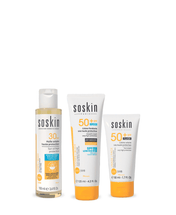
To maintain uniform skin and prevent the appearance of pigment spots on the face, a suitable routine is necessary. The radiance cleansing foam helps prepare the skin to receive targeted care.

The protective role of melanin against UV rays
Melanin acts as a natural barrier against harmful environmental factors. In fact, it absorbs and disperses UV rays over a wide spectrum of wavelengths, thus reducing their penetration into the skin. The absorbed energy is then released as heat, preventing harmful chemical reactions in skin tissues.
In keratinocytes, melanosomes containing melanin are strategically positioned above the cell nucleus to protect DNA from UV rays. This supra-nuclear protection mechanism limits the formation of free radicals and reduces the risk of genetic mutations that can lead to skin cancers. Furthermore, eumelanin has antioxidant properties which neutralize the oxidative stress induced by exposure to UVA.
However, this natural defense system has limits. Depending on the phototype, the protective effect only lasts a few minutes to a few hours. Beyond that, the risks of sunburn, premature skin aging and skin cancer increase considerably. Overexposure to the sun can also cause localized excess melanin, leading to the appearance of brown spots on the face. To understand how to act on these protests, consult our article on lightening milk as an anti-spot ally.
The uniformizing cream helps regulate melanin production for an even complexion, while lightening body milk acts on sensitive areas prone to hyperpigmentation on the face and body.
How dark spots form: the process of melanogenesis
Melanocytes: melanin-producing cells
Melanocytes are specialized cells located at the dermo-epidermal junction, in the basal layer of the epidermis. Their density varies depending on the body area: we count around 1000 to 1500 melanocytes per mm² on the body, and 2000 or more per mm² on the face. These cells have a particular morphology with numerous extensions called melanocyte dendrites, which allow them to come into contact with the surrounding keratinocytes. Each melanocyte interacts with approximately 36 keratinocytes, forming what we call the epidermal melanization unit.
Stages of melanin production
Melanogenesis follows a cascade of precise biochemical reactions. First, the enzymes necessary for this mechanism are synthesized: tyrosinase, tyrosinase-related protein-1 (TRP-1) and tyrosinase-related protein-2 (TRP-2). These proteins are produced in the endoplasmic reticulum and then transported to the Golgi apparatus.
Then, melanosomes are formed by fusion of microvesicles. At this stage, these organelles remain non-pigmented and the tyrosinases remain inactive. The actual synthesis begins when tyrosinase transforms tyrosine, an amino acid supplied by the bloodstream, into DOPA and then into dopaquinone. Depending on the enzymatic variations, this process results in the formation of either eumelanin or pheomelanin with the intervention of sulfur compounds.
Melanosomes evolve in 4 distinct stages. Stages I and II correspond to non-pigmented organelles, characterized by intraluminal membrane structures then an organized fibrillar network. Melanin deposits appear at stages III and IV, giving mature melanosomes their black color.
The transfer of melanin to keratinocytes
Once mature, melanosomes migrate from the cell body to the tips of melanocyte dendrites where they accumulate. The mechanism of transfer to keratinocytes is still debated in the scientific community. Several hypotheses coexist: exocytosis-endocytosis, cytophagocytosis, tunneling nanotubes, or even the vesicular model.
In keratinocytes, melanin groups around the cell nucleus to form a protective shield against UV rays, a phenomenon called “capping”. The melanosomes are then gradually eliminated as the keratinocytes rise towards the skin surface.
When the process goes wrong: excess melanin
Hyperpigmentation occurs when the body produces too much melanin, creating areas where pigmentation becomes uneven. UV rays are the most powerful triggers of melanogenesis, particularly stimulating tyrosinase. Sometimes some melanocytes don't stop and continue to secrete melanin. These abnormal amounts are distributed irregularly and accumulate, forming spots of hyperpigmentation. This disruption can also result from excessive exposure to the sun, significant pollution or hormonal changes.
The main causes of pigment spots on the face
Age spots result from several triggers that disrupt normal melanin production. Understanding these causes allows you to adopt the right actions to preserve an even complexion.
Exposure to the sun and UV rays
Ultraviolet rays are the main cause of facial hyperpigmentation. Oxidative stress caused by UVA and UVB rays is the primary source of premature aging and pigmentary disorders. In fact, 80% of skin aging is linked to UV rays. Prolonged exposure to the sun throughout life, and particularly sunburn, promotes the appearance of brown spots.
Little-known fact: sunburn taken before adulthood promotes the later appearance of pigment spots. After years of sun exposure, melanocytes can produce a local surplus of melanin and cause brown spots on the face, neck, décolleté and hands. After the age of 50, 90% of people with white skin have brown spots that are more or less developed depending on their phototype and the precautions taken.
To prevent these manifestations, discover our article on how to prevent sun-related brown spots.
Hormonal changes and pregnancy
Hormonal upheavals stimulate the activity of melanocytes. Melasma occurs when the female sex hormones estrogen and progesterone activate the production of melanin during sun exposure. This hyperpigmentation affects 10 to 15% of pregnant women and 10 to 25% of women taking oral contraception. Estrogens produced during pregnancy particularly stimulate the synthesis of melanin, the pigment responsible for skin coloring. Melasma usually appears on the upper lip, cheeks and forehead.
Skin inflammation and acne
Post-inflammatory hyperpigmentation occurs when damaged or traumatized skin heals and leaves a discolored area. We often find it in people suffering from acne, atopic dermatitis or psoriasis. When the skin is attacked, repair and healing mechanisms are accompanied by hyperproduction of melanin, creating brown spots. Poorly managed acne leaves dark marks, especially if the pimples are handled. Burns, irritations, hair removal and shaving also cause micro-inflammations generating hyperpigmentation. Sun exposure worsens these symptoms.
Lightening milk is an effective ally in reducing these marks.
Aging of the skin
Over the years, the number of melanocytes gradually decreases. The remaining cells produce melanin in a localized and disordered manner. Cell turnover slows with age, making the skin less effective at repairing sun damage. Our sun capital is depleted and the skin handles aggression less well, producing melanin excessively and irregularly.
Photosensitizing drugs
Some medications absorb UV rays and trigger skin reactions. Nonsteroidal anti-inflammatory drugs, diuretics, antibiotics (fluoroquinolones, tetracyclines), antiepileptics and statins are among the main photosensitizers. These substances cause phototoxicity within a few hours in the sun, creating an exaggerated sunburn. Isotretinoin, proton pump inhibitors, and some oral antidiabetics also pose this risk.
The different types of facial hyperpigmentation
Several distinct forms of hyperpigmentation affect the face, each with specific characteristics that help identify them.
Solar lentigo (age spots)
Solar lentigo, also called senile lentigo, is the most common form of hyperpigmentation. These flat, light brown to dark brown spots measure between 5 and 10 mm in diameter. They appear on areas exposed to the sun: face, neck, décolleté, forearms and backs of the hands. Incidence increases with age and affects more than 90% of white people over 50 years old. These marks result from clumps of melanin incorporated into the superficial part of the skin and demonstrate skin photoaging linked to repeated sun exposure during childhood and adolescence.
Melasma or pregnancy mask
Melasma mainly affects women and appears as large dark spots on the face. Between 10 and 15% of pregnant women have this hyperpigmentation. Three forms exist: epidermal melasma affects the upper layer with clearly demarcated brownish spots, dermal melasma affects the deeper layers with a blue-gray coloring, and the mixed form combines both with brown-gray spots. Locations vary: centrofacial melasma affects the forehead, chin and upper lip, malar melasma affects the cheeks and nose, while mandibular melasma is located on the lower cheeks and jaws. Discover how the Radiance Cleansing Foam prepares your skin to receive targeted care.
Post-inflammatory hyperpigmentation
Post-inflammatory hyperpigmentation occurs after skin damage or inflammation. It particularly affects dark to dark skin. These flat spots range from pink to red, brown or black depending on skin tone and depth of hypercoloration. People suffering from acne are frequently affected. The uniformizing cream helps to reduce these residual marks.
Freckles
Freckles, or ephelides, appear during the first three years of life. They result from a genetic mutation in the MC1R gene which inhibits the production of eumelanin and promotes the accumulation of pheomelanin, a reddish pigment. These small flat spots intensify in summer and fade in winter. Sensitive areas lightening body milk is a solution to even out the complexion across the entire body.
How to prevent sun-related dark spots
Preventing it remains much simpler than treating facial hyperpigmentation. Adopting the right reflexes today saves you from long and costly corrective routines.
Daily sun protection
Applying SPF 50+ every morning is a non-negotiable gesture, all year round. Indeed, UVA rays pass through clouds, windows and even the blue light from screens stimulates the production of melanin. Renewing the application every 2 hours during prolonged exposure and after swimming guarantees optimal protection. However, only 24% of people respect this frequency in summer. Between 10 a.m. and 4 p.m., when solar energy reaches its maximum, limit exposure Protects effectively against the overproduction of melanin.
Avoid sources of skin inflammation
Never touching or piercing pimples prevents post-inflammatory hyperpigmentation. Each irritation or lesion risks causing localized overproduction of melanin. Favoring gentle, non-irritating products preserves skin balance.
Adopt a suitable skincare routine
In the morning, clean with radiance cleansing foam prepare the skin. Then applying an antioxidant serum rich in vitamin C reduces melanin transfer. The uniformizing cream with SPF50+ offers dual action: protection and treatment. In the evening, a night treatment activates cell renewal and accelerates the elimination of pigmented cells. For the body, the lightening body milk sensitive areas evens out the complexion.
Preventive cosmetic active ingredients
Vitamin C neutralizes the free radicals responsible for dark spots. Niacinamide specifically blocks the transfer of melanin to the skin. Find out how the lightening milk becomes your best anti-stain ally.
Conclusion
Melanin Protects naturally your skin, but its overproduction creates unsightly brown spots. We have demystified this complex process to enable you to act effectively. The causes are multiple: sun exposure, hormonal upheavals, skin inflammations. Therefore, prevention remains your best strategy.
A routine adapted with radiance cleansing foam, the uniformizing cream and the lightening body milk helps you maintain an even complexion. Apply your SPF 50+ daily and protect yourself from the sun. These simple actions will save you from lengthy and costly corrective treatments.