

These red spots that appear on your face after 25 years are not inevitable. Acne affects nearly 40% of women aged 25 to 40, compared to only 10% of men. In fact, approximately 40 to 50% of adult women suffer from chronic acne. Whether it's small red pimples on the body, itchy little red pimples or localized blemishes on the face, adult acne can appear at all ages. In this article, you will discover why these itchy red spots appear after the age of 25, what are the main causes and, above all, what effective solutions to adopt to regain healthy skin.
Adult acne: understanding this phenomenon after 25 years
What exactly is adult acne: Adult acne refers to imperfections that persist or appear after the age of 25. In 60% of cases, it is persistent acne which begins in adolescence and continues into adulthood. For the remaining 40%, acne begins after age 25 without any significant history. Unlike adolescent acne which affects the entire face and sometimes the back, adult acne is more concentrated on the lower face. It is not necessarily accompanied by pustules but rather by inflammation and painful microcysts.
The different types of buttons and their location: The microcysts are small, hard bumps under the skin, noticeable to the touch, giving a grainy skin feeling. The papules are characterized by inflammatory red spots, painful and hot to the touch. The pustules are distinguished by a white or yellowish head filled with pus. In severe forms, nodules appear as large, rounded, deep, inflamed pimples.
In adult women, the most affected areas are the chin, around the mouth and neckline. The red buttons usually appear on the cheeks or along the jawline. The hormonal upheaval produces a surplus of sebum which is accompanied by acne spots located around the mouth and chin.
Adult acne in women vs men: Women are significantly more affected, with an incidence estimated between 12 and 20%, compared to 8 to 10% in men. In women, acne tends to be concentrated on the lower face, with inflammatory lesions including nodules and microcysts that can leave residual pigmentation. In men, acne is usually deeper and more widespread, affecting the back and chest in addition to the face. It tends to be more resistant to treatment due to the depth of the lesions.
The psychological impact of pimples after 25 years: Adult acne disrupts daily life. According to a survey, 83% of women believe that their acne spots have affected their daily life or their relationships with friends. The risk of developing major depressive disorder would be 18.5% in the acne population, compared to 12% in the rest of the population. A study reveals that 70% of people with acne-prone skin suffer from a lack of self-confidence. Displaying skin lesions promotes psychological distress, with damage to self-esteem and a greater risk of social isolation.
Why do pimples appear after 25 years: the main causes
Hormonal fluctuations and the menstrual cycle: More than 60% of women affected by acne notice a worsening of their symptoms before their period. Small red spots usually appear 7 to 10 days before your period. During the second phase of the cycle (days 14 to 28), progesterone levels increase and stimulate sebum production. This hormone becomes predominant and causes the appearance of red spots on the body, particularly on the lower face.
The role of stress and cortisol: Chronic stress stimulates the production of cortisol, a hormone that disrupts androgen balance and worsens acne. Indeed, cortisol acts directly on the sebaceous glands by increasing the production of sebum. This excess sebum clogs the pores and creates a breeding ground for itchy little red spots. Furthermore, using treatments that are too aggressive to try to eliminate imperfections can trigger a skin rebound effect, aggravating excess sebum and acne breakouts. Discover how to stop the rebound effect on your skin in 3 simple steps.
Heredity and genetic predisposition: You are 25 times more likely to develop acne if both parents suffered from it. The ability to produce sebum constitutes an individual genetic component. Furthermore, hereditary predisposition plays a role for adult forms of acne.
Diet and foods with a high glycemic index: Foods with a high glycemic index cause blood sugar to rise quickly. The body then produces more insulin, which stimulates androgens and causes an overproduction of sebum. Populations following a low glycemic index diet, such as the Kitavans or the Aché, do not have any cases of acne.
Unsuitable cosmetics and comedogenic products: Some cosmetic ingredients clog pores by forming an occlusive film on the surface of the skin. Mineral oils from petrochemicals, silicones and certain vegetable oils such as coconut oil create blockages in the pores. These products provide no nutrients and encourage the appearance of small red pimples on the body.
Pollution and the urban environment: Fine PM2.5 particles manage to slip under the protective barrier of the skin. They first cause the oxidation of sebum, then increased oil production and hyperkeratinization. Nitrogen oxides and sulfur dioxide weaken the hydrolipidic film, generating an overproduction of sebum which clogs the pores.
What to do against adult acne: effective treatments
Local treatments (anti-acne creams and gels): Your dermatologist will prescribe local treatments adapted to your type of red spots. Benzoyl peroxide, used at concentrations of 2.5% to 10%, fights bacterial overgrowth and reduces inflammation. Topical retinoids (tretinoin, adapalene) promote cell renewal and prevent the formation of comedones. Azelaic acid acts on all components of acne with good tolerance. These treatments apply to the entire affected area, not just the lesions.
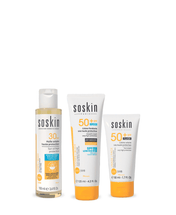
👉 Discover SOSKIN’s stop imperfection serum
Smooths appearance and reduces the size of imperfections, without damaging the skin.

SOSKIN complete anti-imperfection routine
Corrects , prevents recurrences and rebalances the skin by reducing imperfections, with targeted effectiveness on retentional, inflammatory and severe acne.

👉 Discover the complete routine
Oral treatments prescribed by the dermatologist: In cases of moderate to severe inflammatory acne, cyclin family antibiotics (doxycycline, lymecycline) are prescribed for a maximum duration of 3 months. For severe resistant forms, isotretinoin remains the standard treatment. This molecule blocks the production of sebum but requires strict contraception in women due to a risk of fetal malformations exceeding 30%. Zinc gluconate at 15 mg constitutes a less effective alternative but without phototoxicity.
Natural solutions and essential oils: Tea tree essential oil has documented antibacterial properties against acne. Apply a pure drop to itchy little red spots, morning and evening. Aloe vera soothes irritations and accelerates healing. On the other hand, these solutions are not part of official medical recommendations and their use requires the advice of a professional.
Dermatological procedures: peels and laser: The superficial peel tightens pores and visibly reduces red spots on the body. A complete protocol requires 4 to 6 sessions spaced 4 weeks apart. The laser stimulates collagen production and reduces residual scars. These dermatological techniques effectively complement drug treatments.
Adopt the right daily actions to prevent flare-ups
- Clean your face morning and evening with a soap-free gel or bar with a pH close to that of the skin to eliminate excess sebum without drying it out. Then apply a non-comedogenic moisturizer suitable for acne-prone skin, even if your skin is oily. Insufficient hydration causes overproduction of sebum in response.
- Resist the urge to touch or poke your itchy little red bumps. You risk pushing bacteria deeper into the skin, worsening inflammation and increasing the risk of scarring. Your hands carry microbes that irritate your skin.
- Apply daily sunscreen SPF 50+ non-comedogenic. The sun thickens the epidermis and aggravates acne by causing an outbreak with numerous comedones. It also promotes pigmented scars, particularly on dark or dark skin.
- Stress intensifies symptoms because the body produces more cortisol, a hormone that stimulates the oil glands. Practice relaxing activities like meditation or daily exercise.
- Limit high glycemic index foods like sweets and refined carbohydrates which may worsen acne in some individuals. Favor fatty fish rich in omega-3 and foods containing zinc.
Ultimately, adult acne undoubtedly represents a complex challenge, but you now have the keys to overcome it. Hormones, stress, diet, cosmetics: each factor counts and deserves your attention. Adopt a suitable routine with non-comedogenic products, protect your skin from the sun and consult a dermatologist to specifically identify the treatments that correspond to your situation. The results may not be immediate, but your skin will thank you.