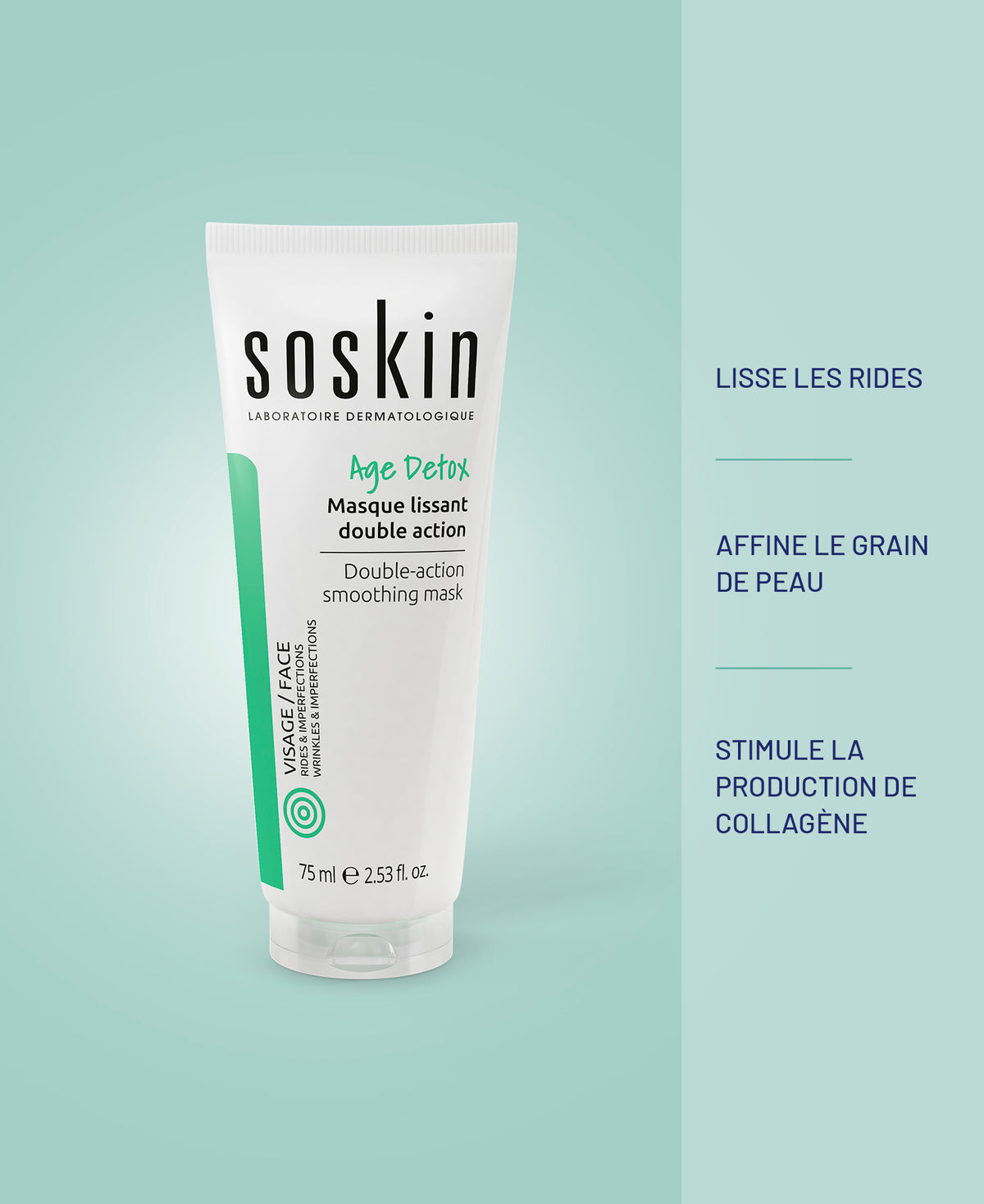


Adult face spots aren't just for teenagers. In fact, microcysts appear as small pimples under the skin, often located on the forehead, chin or cheeks. These imperfections can progress to inflammation and become red, hard and painful pimples. In this article, we explore the different types of adult facial imperfections, including adult facial red spots, microcysts, and redness. We also analyze the cause of adult face pimples, risk areas such as chin pimples, and especially adult face pimples treatment suitable for regaining healthy skin.
The different types of adult facial imperfections
Red pimples on adult face
Papules represent the most common inflammatory lesions on the face. These red growths are less than 5 millimeters in diameter and contain no purulent material. Formation occurs when sebum builds up in the hair follicle, creating a favorable environment for the bacteria Cutibacterium acnes to colonize. This bacterial overgrowth causes the pore wall to break down, triggering a visible inflammatory response.
The papules are characterized by their pink to red color and their solid texture to the touch. Often painful and hot, they can resolve spontaneously or develop into pustules if a bacterial infection sets in. Their unsightly appearance is sometimes accompanied by crusts, or even lasting marks on the skin.
Microcysts: pimples under the skin
The microcyst results from an accumulation of sebum and keratin under the skin. These closed comedones measure just a few millimeters and vary between white and yellow. Generally located on the T zone of the face (forehead, nose, chin) and the cheeks, they form a small grain perceptible to the touch.
The microcyst can evolve in three distinct ways. If the sebum does not drain, the pore becomes dilated. If the blocked pore oxidizes on contact with air, it turns black and a blackhead appears. Finally, when the microcyst explodes under the skin, a red, painful abscess appears. The stagnation of sebum in a confined environment, combined with the proliferation of Cutibacterium acnes, transforms these retentional lesions into inflammatory spots.
Redness and inflammation
Facial redness presents in various forms, ranging from simple temporary blushing to chronic manifestations. In France, rosacea affects nearly 4 million people. This chronic dermatological condition is characterized by persistent redness in the center of the face due to abnormal dilation of small vessels.
Erythrosis constitutes the first degree of rosacea, manifested by permanent diffuse redness on the cheeks and sides of the nose. Unlike temporary redness triggered by external factors such as cold or stress, rosacea takes hold over the long term. It is often accompanied by burning sensations and frequent hot flashes.
Open blackheads and comedones
Open comedones measure between 1 and 3 millimeters in diameter. Their black color comes from the melanin contained in the sebum which oxidizes on contact with air, forming a dark-colored plug on the surface of the pilosebaceous follicle. This chemical reaction distinguishes blackheads from closed microcysts.
Overproduction of sebum and accumulation of dead cells clog skin pores, creating these stubborn blemishes. Blackheads mainly appear on the T zone of the face, areas with the most sebaceous glands. Although rarely spontaneously inflamed, they can develop into papules or pustules if mishandled.
Why do imperfections appear in adults?
Hormonal imbalances in adults
Hormonal acne occurs at all ages and particularly affects women. This type of imperfection results from an imbalance between progesterone, estrogen and testosterone. These hormones cause an overproduction of sebum which clogs the pores of the skin.
In women, hormonal fluctuations persist throughout life. Menstruation, childbirth, pregnancy, premenopause and menopause change hormonal balance. Taking or stopping birth control pills, especially progestin-only pills, increases the level of androgen hormones that stimulate the pilosebaceous follicle.
The menstrual cycle directly influences skin appearance. Progesterone, dominant in the second part of the cycle, stimulates the production of sebum. Testosterone becomes more pronounced at the end of the cycle, when female hormones reach their lowest level. The drop in progesterone levels towards the end of the cycle also causes pores to dilate, making it easier for bacteria to penetrate the skin.
Pimples usually appear on the lower face, forming a characteristic U shape on the jaw, chin and neck. The chin pimple thus represents a telltale sign of hormonal acne.
Excess sebum and clogged pores
The overproduction of sebum covers the skin surface with an abundant lipid film which makes the skin shiny. This hyperseborrhea creates an environment conducive to skin disorders.
Hyperkeratinization is the next step. Dead cells accumulate in the pilosebaceous follicle instead of being eliminated naturally. Gradually, they form micro-comedones which become blackheads or whiteheads.
Stress and lifestyle
Cortisol, the stress hormone, disrupts hormonal balance. A surge of stress or anxiety induces cortisol production and triggers a hormonal acne outbreak. At the skin level, cortisol stimulates the sebaceous glands and increases sebum production. It also disrupts the differentiation of keratinocytes and reduces the synthesis of epidermal lipids, promoting the obstruction of pores and the appearance of inflammatory lesions.
Diet and its impact on the skin
Diet acts directly on sebum production and hormonal regulation. Dairy products cause hormonal and intestinal imbalances. Skimmed milk contains a specific protein, whey, which increases insulin levels and stimulates the secretion of sebum by the sebaceous glands.
Refined sugars and industrial products worsen acne by causing spikes in blood sugar. A high glycemic index promotes inflammatory processes in the body and stimulates sebum production.
Comedogenic cosmetics
Comedogenic ingredients clog skin pores. They are found in foundations, powders and some rich moisturizers. Isopropyl laurate and isopropyl myristate are particularly comedogenic. These occlusive active ingredients prevent the skin from breathing and encourage the appearance of imperfections.

How to recognize and differentiate imperfections
Identify red and inflammatory spots
Distinguishing a papule from a pustule requires careful observation. The papules measure between 1 and 5 millimeters in diameter and appear as red pimples with no visible head. We recognize them by their firm texture and their total absence of pus. Indeed, when we try to pierce them, no fluid or purulent discharge comes out. These red pimples on the adult face are painful to the touch and give off heat, a sign of active inflammation.
Pustules, for their part, are distinguished by the presence of visible pus in the center. They result from the evolution of a papule or a white dot into a red pimple with a white head. This white bump measures 1 to 4 millimeters in diameter and is surrounded by red, inflamed skin. Piercing the pustules greatly increases the risk of scarring and infection.
Recognizing microcysts on the face
Microcysts appear as small white pimples 2 to 3 millimeters in diameter stuck under the skin. We easily identify them by touch, because they form a small grain under the skin, giving a grainy skin feeling. Their color varies between white and yellow.
Before turning white, these pimples appear in the form of small red pimples that we are unable to pierce. Unlike an open comedo, the microcyst cannot be extracted by simple pressure. Pimples mainly develop on the cheeks and appear as redness. These are small pimples that don't go away and persist over several weeks.
Distinguish temporary redness from chronic redness
Flushes represent sudden, occasional redness, often triggered by factors such as diet, temperature changes or UV exposure. This temporary redness is accompanied by hot flashes in the face and neck.
However, if flushing becomes very frequent or redness becomes permanent, it may be a skin condition called rosacea. Erythrosis constitutes the first degree of this chronic disease. Red patches gradually appear on the nose, cheeks or forehead. Rosacea is characterized by permanently visible blood vessels in the form of fine lines.
Risk areas: chin button and T zone
The chin contains a large number of sebaceous glands, which is why this area easily develops blemishes. The T zone, which includes the forehead, nose and chin, has more pores than the rest of the face. These pores get clogged easily, quickly leading to pimples.
Acne on the chin represents a typically hormonal area. It often appears around periods, after stopping the pill, or at certain stages of life. This inflammatory acne is mostly located in the lower face, along the jaw and on the chin.
Daily care routine to prevent blemishes
Gentle, non-aggressive cleaning
We adopt a double cleansing morning and evening to effectively eliminate impurities without weakening the skin. Make-up removal is carried out with a fatty substance such as oil or butter to remove particles of pollution, make-up and sebum. The following cleaning removes this fatty substance using a suitable cleansing gel or foam.
For oily skin prone to adult face pimples, we favor a cleansing gel with purifying and cleansing action. Normal to combination skin opts for a cleansing foam whose action remains gentler. We gently massage the face with circular movements paying particular attention to the T zone, then rinse thoroughly with lukewarm water. Patting dry with a clean towel without rubbing protects the skin from any irritation.
Hydration suitable for skin with imperfections
Moisturizing skin with imperfections remains essential. Without hydration, the skin becomes dehydrated and compensates for this lack of water by producing more sebum. This overproduction aggravates red pimples on the adult face and microcysts.
We choose a light, non-comedogenic cream to maintain skin moisture balance. Light gel-creams enriched with purifying and regulating active ingredients are ideal. Mattifying fluids penetrate quickly thanks to their fine, non-greasy texture. We apply our moisturizer morning and evening to maintain a constant water level and reduce inflammatory lesions.
Targeted treatments and serums
Anti-blemish serums work thanks to their high concentration of active ingredients. Salicylic acid penetrates inside pores to dissolve excess sebum and deeply exfoliate dead cells. Niacinamide regulates sebum production and reduces pore size. Zinc provides antibacterial properties and prevents the appearance of future spots.
We apply the serum before the moisturizer to optimize the penetration of the active ingredients. Some serums are used locally on spots, others on the entire face to prevent the appearance of imperfections.
Gentle exfoliation to avoid hyperkeratinization
Exfoliation removes dead cells and prevents pores from becoming clogged. We do it once or twice a week with a suitable product. Exfoliants containing salicylic acid unclog pores and reduce stubborn impurities. Alpha hydroxy acids (AHAs) like glycolic acid stimulate cell renewal.
We avoid excessively exfoliating so as not to create more inflammation. Too frequent exfoliation weakens the skin barrier and causes redness and tightness.
Daily sun protection
We apply sunscreen with a high SPF throughout the year. UV rays act even on overcast days and increase the risk of hyperpigmentation in areas of lesions. We choose a non-comedogenic and anti-acne sunscreen to protect the skin without clogging pores.
Sun protection is applied every morning as the last step in our skincare routine. We renew the application every two hours in case of prolonged exposure. In the evening, double cleansing removes all sun filter residue to let the skin breathe.
Treatment solutions for adult blemishes
Natural treatments and vegetable oils
Several vegetable oils rebalance sebum production without attacking the skin. We apply jojoba or hazelnut oil morning and evening to regulate and cleanse the epidermis. Rosehip oil promotes healing and stimulates skin regeneration. Black seed oil purifies the skin, but we always dilute it in another vegetable oil due to its high allergic risk.
Aloe vera gel is used as a serum or mask to moisturize, soothe and purify. We make a green clay mask once a week, without ever letting it dry completely on the skin. In case of sensitive skin, white or pink clay is best suited.
Effective dermatological active ingredients
Salicylic acid removes dead cells and unclogs pores thanks to its keratolytic properties. Glycolic acid penetrates the superficial layers of the skin and facilitates the elimination of comedones. Azelaic acid regulates sebum and works effectively against mild to moderate acne.
Benzoyl peroxide creates an unfavorable environment for acne-causing bacteria, including Cutibacterium acnes. Retinoids accelerate cell renewal and unclog clogged pores. Niacinamide reduces the redness associated with red pimples on the adult face thanks to its anti-inflammatory properties. Zinc has sebum-regulating, antibacterial and healing properties without contraindication when used topically.
Treatments in dermatological offices
The HydraFacial cleanses the skin deeply to eliminate impurities. Chemical peels promote the creation of collagen. Microdermabrasion corrects damage to the upper layers of the epidermis. Microneedling stimulates collagen production and improves skin texture. Fractional lasers treat deep acne scars.
Actions to absolutely avoid
We never pop our adult facial pimples because it increases the risk of infection, spreads bacteria, and leaves scars. We avoid sun exposure without protection, because the sun thickens the epidermis and aggravates acne due to the rebound effect. We don't touch our face all day to limit the transfer of microbes.
When to see a dermatologist
We consult in cases of persistent acne despite appropriate care, late onset after 25 years, significant inflammatory lesions or lasting scars. Early treatment prevents permanent scarring.
Conclusion
Adult facial imperfections are a daily challenge, but they are not inevitable. We now have the keys to understanding their origins and recognizing them correctly. A suitable skincare routine, targeted active ingredients and preventive actions constitute the foundations of healthy skin. If home care is not enough, dermatological treatments offer effective solutions. The main thing is to personalize your approach according to your skin type and your specific imperfections. Without a doubt, patience and regularity in your care will allow you to obtain lasting results and regain confidence in your skin.