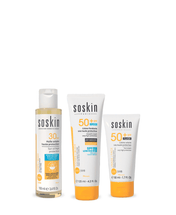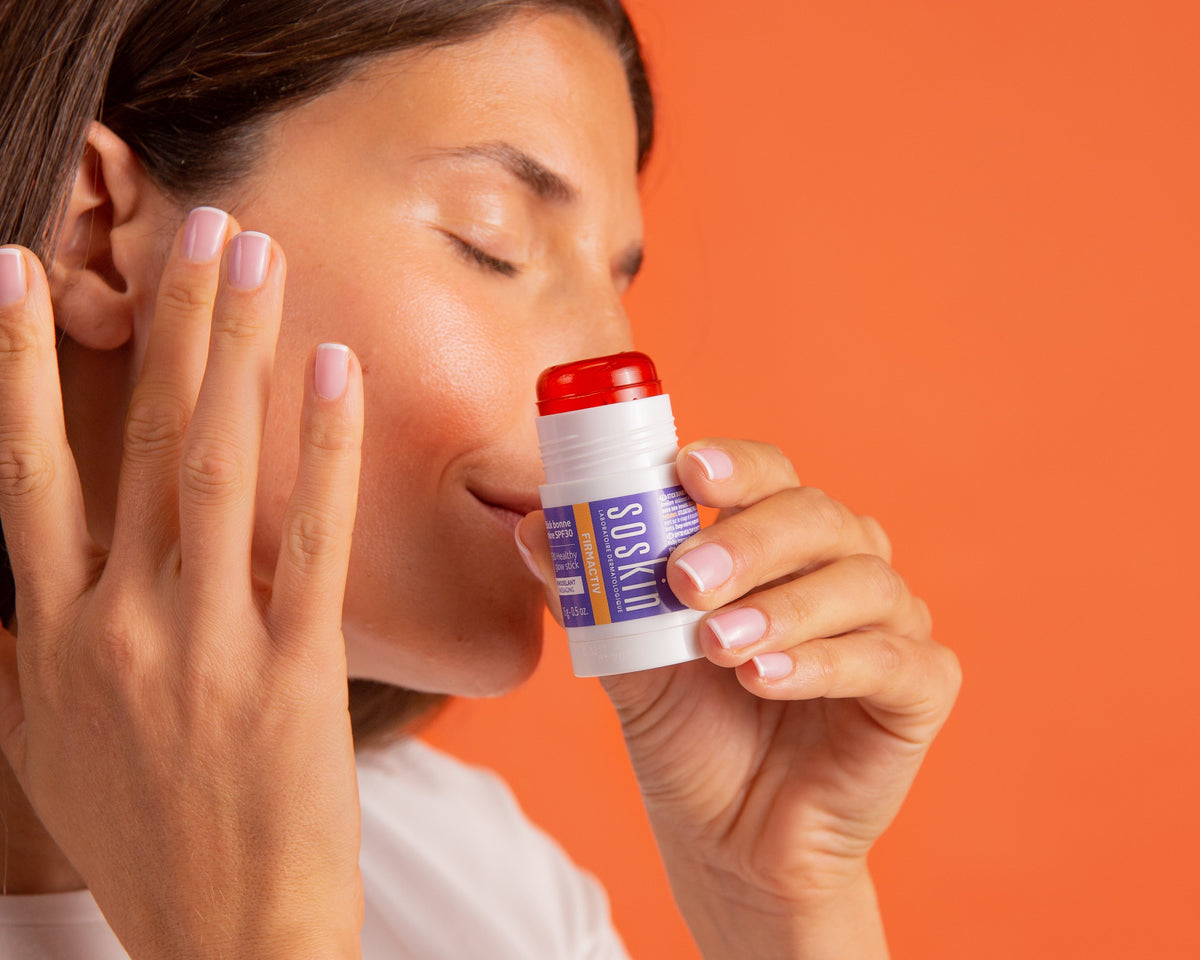


Many people think that it is impossible to tan with sunscreen, but this misconception needs to be corrected. The truth is, sunscreen tanning is not only possible, but also recommended to protect your skin. In fact, an SPF 30 sunscreen blocks around 97% of UV rays, allowing around 3% to pass through, which is enough to stimulate melanin production. No sunscreen can guarantee 100% protection, which means you will always tan a little. In this article, we'll explore how tanning works, whether you can really tan with sunscreen 50, and most importantly how to get a tan safely without compromising the health of your skin.
What is tanning and how does it work?
Tanning is the result of a natural defense mechanism against ultraviolet rays. Melanin, the pigment responsible for skin coloring, plays a photoprotective role by absorbing UV rays. Eumelanin dissipates more than 99.9% of absorbed UV radiation, functioning as a protective shield.
Israeli researchers have discovered that tanning only occurs after the skin has carried out emergency DNA repair. The body prioritizes its priorities: it Repairs first cellular damage caused by radiation, then allocates resources to melanin production. This process explains why some people tan faster than others.
UVB directly stimulates melanocytes which increase the synthesis of melanin in the basal layer of the epidermis. This melanin is then transferred to keratinocytes and builds up to the surface of the skin, causing visible darkening. UVA rays, for their part, oxidize the already existing melanin for an immediate but temporary tan.
The Fitzpatrick classification identifies six phototypes according to the ability to tan. Phototype I always burns and never tans, while phototype VI never burns. This diversity is explained by the quantity and type of melanin produced, determined genetically.

Can you really tan with sunscreen?
The answer to this question is yes. Tan with sunscreen remains entirely possible, even with a high protection index. In reality, no sunscreen can guarantee 100% protection. The term "total screen" has also been banned in Europe since 2006 on sun cream labels, precisely because it gave a false impression of complete blocking of UV rays.
SPF 50 blocks 98% of radiation and allows 2% to pass through. SPF 30 blocks 97% of UV rays and allows 3% to pass through. This reduced amount does not cause sunburn, but activates the production of melanin in the upper layers of the skin, just enough to tan without the risk of burning.
Likewise, 15 minutes of exposure to the sun is enough to trigger the tanning mechanism. The skin takes 2 to 3 days to color nicely, therefore the tan with sunscreen will be more uniform and above all more durable.
Whether you opt for chemical filters or mineral filters, the conclusion remains the same: you tan by exposing yourself to the sun even with high protection. By tanning too quickly and without protection, you risk peeling and the pigmented cells are quickly eliminated. And if it's too late, you can always find out more by reading the article: How to Treat Sun Spots and Protect Your Skin
How to tan safely without damaging your skin
Protecting your skin remains the top priority for tanning with sunscreen without risk. Adapt your SPF to your phototype: very fair skin requires a minimum SPF50+, while intermediate skin can opt for SPF30 for moderate exposure.
The quantity applied determines the real effectiveness of your protection. We need to use approximately 35ml of product to cover an adult's entire body, the equivalent of seven teaspoons. In fact, applying an insufficient quantity drastically reduces protection: if you divide the dose by two, protection can decrease by two thirds.
Apply your protection 20 to 30 minutes before exposure to allow the filters to form an effective barrier. Then reapply every two hours and systematically after each swim or excessive sweating.
For an optimal sunscreen tan 50, choose times when the rays are less intense: between 9:30 a.m. and 11 a.m. in the morning, or after 4 p.m. in the afternoon. Absolutely avoid exposure between 12 p.m. and 4 p.m., a period when 75% of daily ultraviolet radiation is concentrated.
Intensive hydration after each exposure prolongs your tan up to 30% longer. Well-hydrated skin maintains its golden color and delays natural flaking.
conclusion
Tanning with sunscreen is not only possible, but it is also the healthiest approach to achieving a tanned complexion. we have seen that a high SPF lets in enough UV rays to stimulate melanin production without risking sunburn. by applying the right amount, renewing your protection regularly and choosing appropriate times, you will obtain an even and long-lasting tan while preserving the health of your skin.