

Finding the ideal sunscreen for oily skin can seem like a real challenge, especially when the summer heat intensifies sebum production. In fact, oily skin shines up to twice as much, particularly in the T zone. We all know this frustrating situation: applying sun protection which leaves a shiny finish, clogs pores and encourages the appearance of new imperfections.
However, protecting yourself from UV rays remains essential, whatever your skin type. These rays represent a real danger to our health, causing sunburn, premature skin aging, acne breakouts and, even more seriously, skin cancer. In this regard, the National Cancer Institute reveals that 80 to 100,000 new cases are discovered each year. Therefore, choosing a non-comedogenic sunscreen adapted to the specific needs of oily skin becomes essential.
In this article, we will explore together the best choices of sunscreen for oily, acne-prone skin, the essential criteria for selecting effective protection against UVA and UVB with an SPF of at least 30, as well as the most suitable textures to avoid the shiny effect. In addition, we will share our application tips for optimal protection without compromising the balance of your skin.
Understanding the specific needs of oily skin in the sun
Oily skin reacts in a particular way to the sun. In summer, the heat further stimulates the sebaceous glands which produce up to twice as much sebum, particularly on the T-zone. This natural overproduction is accompanied by increased sweating, creating an environment conducive to clogged pores and the proliferation of acne-causing bacteria.
Contrary to popular belief, the sun is not an ally for acne-prone skin. Certainly, the initial drying effect gives the illusion of a temporary improvement in imperfections. However, this improvement is misleading. Under the action of UV rays, the skin thickens to protect itself (hyperkeratinization), thus preventing the normal evacuation of sebum. At the same time, to compensate for dehydration caused by the sun, the sebaceous glands paradoxically increase their production.
This phenomenon causes what dermatologists call "the rebound effect": as soon as exposure to the sun stops, imperfections often reappear in a more intense way. Additionally, sun exposure can worsen the hyperpigmentation of acne scars and trigger summer acne (Mallorca acne) in predisposed individuals.
Therefore, choosing a non-comedogenic sunscreen specifically formulated for oily skin becomes essential to avoid aggravating these problems while providing much-needed protection against UV damage.
Essential criteria for a facial sunscreen for oily skin
To choose a sunscreen suitable for oily skin, certain specific criteria are decisive. A non-comedogenic formula is the first requirement to avoid clogged pores and the appearance of new imperfections. In addition, texture plays a crucial role: favor ultra-light fluids, gels or sprays which penetrate quickly without leaving a greasy film.
Effective sunscreens for oily skin generally contain mattifying agents like green clay or absorbent powders that control excess sebum throughout the day. In this regard, look for “oil-free”, “mattifying” or “dry touch” notices on the packaging.
Some formulations include sebum-regulating active ingredients such as Monolaurin, which significantly reduces spots and helps prevent post-exposure marks. Clinical tests also demonstrate a long-lasting mattifying effect with these ingredients.
Regarding the protection itself, opt for an SPF 50+ offering broad spectrum coverage against UVA, UVB and ideally blue light. Formulas resistant to water, heat and high humidity are also a huge plus.
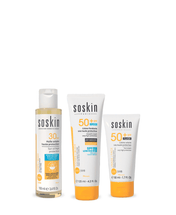
Very high protection fluid sun cream SPF50+

Effectively protects against UVA and UVB, hydrates the skin and prevents sun-related skin damage.
Mistakes to avoid and application tips
Correct application of sunscreen is as important as the choice of the product itself. First, avoid the common mistake of applying too little product – an amount equivalent to a teaspoon is needed for the face and neck. Moreover, waiting until the last moment before exposure compromises the effectiveness of your protection; apply your sunscreen at least 20 minutes before going out.
Another pitfall concerns renewal: a single application is not enough, even with a waterproof formula. Therefore, reapply your sunscreen every two hours, and immediately after swimming or sweating heavily.
For the oily skin acne sufferers, here are some application tips:
- Apply your sunscreen to clean, dry skin, after your light moisturizer but before your makeup
- Pat gently instead of rubbing to avoid irritating problem areas
- Choose powder or spray formulas for touch-ups during the day without disturbing your makeup
In fact, too many people neglect sensitive areas like the eye area or lips. However, these areas require special attention, with specific formulations if necessary.
Remember that even on cloudy days, UV rays pass through clouds and can damage your skin. Therefore, daily sun protection remains essential, whatever the weather.
Conclusion
Therefore, protecting oily skin from the sun requires special attention and suitable products. We have seen that the sun, contrary to popular belief, can worsen acne problems in the long term through a rebound effect. Certainly, choosing a non-comedogenic sunscreen with mattifying agents remains the ideal solution to avoid excessive shine and clogged pores.
The texture of the product also plays a fundamental role in your daily comfort. Therefore, favor light formulas that penetrate quickly without leaving a greasy film. The “oil-free” or “dry touch” notices on the packaging will guide you to the options best suited to your skin type.
Let's not forget that the correct application of your sun protection is just as important as the choice of the product itself. Sufficient quantity, early application and regular renewal constitute the pillars of effective protection.
Finally, while finding the perfect sunscreen for oily skin may seem difficult, today's many specially formulated options make this quest much more accessible. Your skin deserves this daily protection, regardless of the weather, to prevent not only imperfections but also premature aging and more serious risks such as skin cancer.
With these tips in hand, you can now enjoy the sun without compromising the balance of your oily skin. Sun protection thus becomes an ally rather than a source of frustration in your daily care routine.