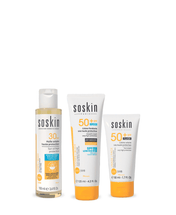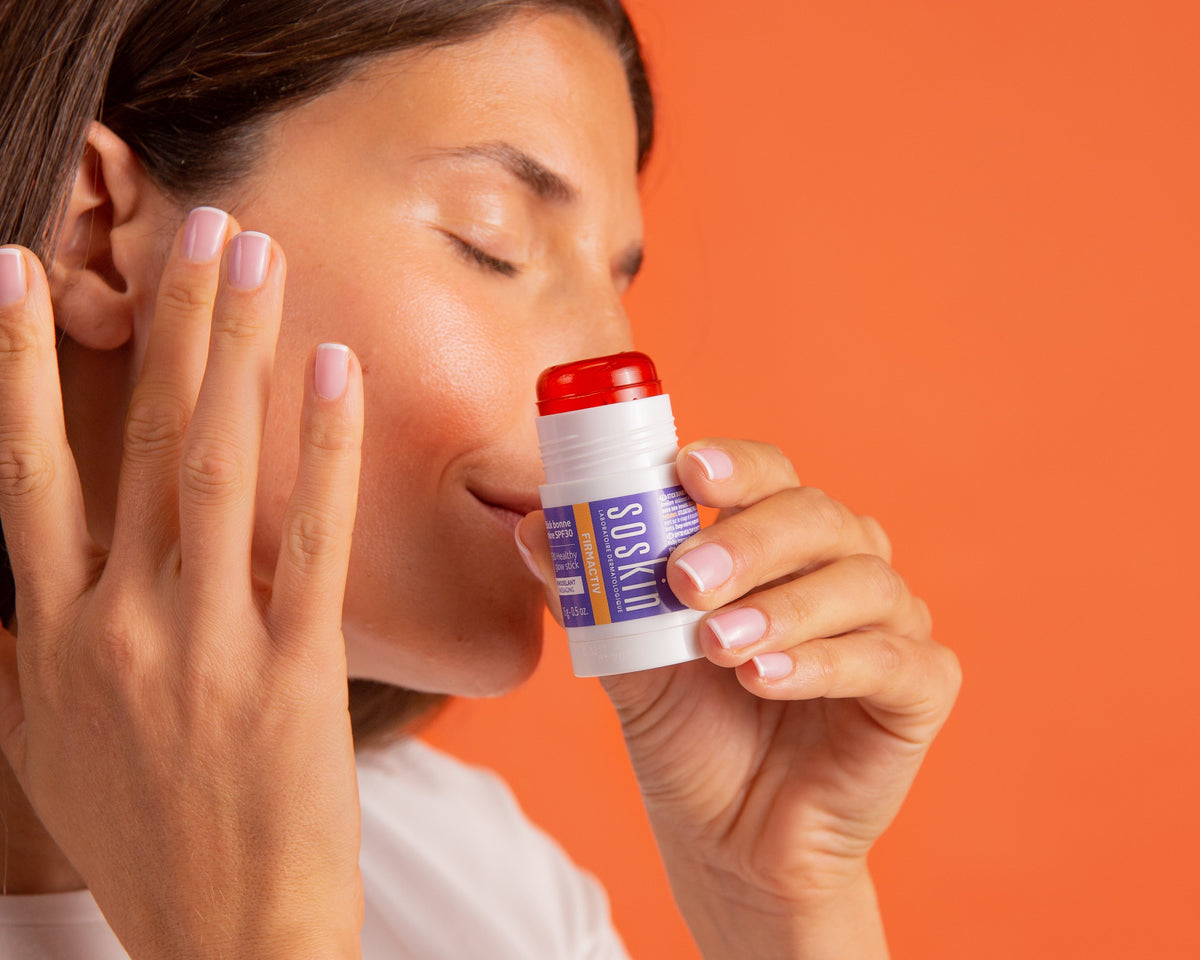


Summer is approaching and with it, the quest for the perfect sunscreen product to protect our face. If you've always thought that sunscreen oils were just for dry skin or that they might clog your pores, it's time to reconsider. Facial sun oils have revolutionized UV protection by offering an effective and respectful alternative for all skin types. In this article, we will demystify the prejudices surrounding sunscreen oils and help you understand why they could well become your new beauty ally this summer.
What is facial sunscreen oil?
A facial sun oil is a UV protection product whose base consists of vegetable or synthetic oils, enriched with chemical or mineral sun filters. Unlike traditional water-based sunscreens, these oily formulations offer a fluid, lightweight texture that absorbs quickly into the skin. These products combine the natural benefits of vegetable oils with effective sun protection. They generally contain oils such as jojoba, argan, fractionated coconut or even sunflower oil, selected for their non-comedogenic properties and their ability to convey UV filters. The modern formulation of sun oils makes it possible to obtain sophisticated textures that stand out from older generations of tanning oils, which often lacked real protection.
The benefits of sunscreen oils for the face
Effective UV protection
Modern sun oils offer protection comparable to, or even better than, traditional sun creams. UV filters disperse evenly in the oil phase, creating a homogeneous protective film on the skin. This optimal distribution of filters makes it easy to achieve the SPF 30, 50 or even 50+ protection indices recommended by dermatologists. In addition, the oily texture adheres better to the skin and is more resistant to water and perspiration.\nThe major advantage lies in the absence of white marks, common with the mineral filters of traditional creams, guaranteeing uniform and invisible application.\n\n
Deep hydration
One of the main advantages of sun oils lies in their ability to nourish the skin while protecting it. The vegetable oils present in the formulation provide essential fatty acids which strengthen the skin barrier.\nThis continuous hydration prevents drying caused by exposure to the sun and maintains the suppleness of the skin. Unlike certain sun creams which can be drying, sun oils leave the skin soft and comfortable.\nThis dual protection-hydration action simplifies your beauty routine by combining two essential steps in a single gesture.
A natural anti-aging effect
Vegetable oils used in sunscreen formulations are naturally rich in antioxidants such as vitamin E, carotenoids or polyphenols. These active compounds fight against free radicals responsible for premature aging.\nBy preventing UV damage while nourishing the skin with anti-aging active ingredients, sun oils offer overall protection against photoaging. They maintain skin elasticity and preserve the radiance of the complexion.\nThis preventive action is particularly appreciated for preserving the youthfulness of the eye contour and delicate areas of the face.
Sun oil and oily skin: myth or reality?
How sunscreen oils don't clog pores
Contrary to popular belief, not all oils are comedogenic. Modern sunscreen oils use oils selected for their compatibility with all skin types, including combination to oily skin. Certain oils such as jojoba or hazelnut oil have a composition close to natural sebum and even regulate sebum production. They are easily absorbed by the skin without leaving an oily film on the surface. The fine texture of sun oils allows rapid penetration, avoiding surface accumulation which could clog pores. The secret lies in the quality of the oils used and their degree of refinement.
The concept of comedogenicity explained
Comedogenicity measures the ability of an ingredient to clog pores and promote the appearance of blackheads. This property is rated on a scale of 0 to 5, where 0 indicates a non-comedogenic ingredient. Quality sunscreen oils exclusively use oils with a comedogenicity index of 0 to 2. For example, jojoba oil (index 0), argan oil (index 0) or sunflower oil (index 0) are perfectly tolerated by acne-prone skin. It is important to check the INCI list of ingredients and to favor formulas dermatologically tested on sensitive and acne-prone skin.
The ingredients to favor
For oily or combination skin, certain ingredients are particularly recommended in sun oils:\n
- Jojoba oil : technically a waxy ester, it regulates sebum production
- Hazelnut oil : light and astringent, it tightens pores
- Grapeseed oil : rich in antioxidants and non-greasy
- Fatty acid esters : allow a dry texture and rapid penetration
Avoid heavy oils like pure coconut oil (unless fractionated) or avocado oil if you have very oily skin. Favor formulas enriched with zinc or niacinamide, with sebum-regulating properties.
How to choose the right facial sun oil?
Selection criteria according to your skin type
For dry skin : opt for rich oils like argan, avocado or sweet almond. These oils provide nutrition and comfort while providing effective protection.
For oily skin : favor light textures based on jojoba, hazelnut or squalane. Look for “non-comedogenic” and mattifying formulas.
For sensitive skin : choose gentle oils such as apricot or chamomile, with mineral filters rather than chemical ones to limit reactions.
For combination skin : balancing oils like jojoba or argan are perfect, adapting to the specific needs of each area of the face.
Recommended protection indices
For the face, SPF 30 is the minimum recommended by dermatologists for daily protection. This level filters 96.7% of UVB rays.\nFor prolonged exposure, outdoor activities or fair skin, choose an SPF 50 or 50+ which blocks 98% of UVB. This maximum protection is particularly important for sensitive areas such as the nose, cheekbones or forehead.\nAlso check the UVA protection, indicated by the circled UVA logo or the words \"broad spectrum\". This protection against UVA is essential to prevent skin aging.
Certifications to look for
\nSeveral labels guarantee the quality and effectiveness of sunscreen oils:\n
- Ecocert/Cosmos : for organic products with natural ingredients
- Natrue : strict certification for natural cosmetics
- Dermatological tests : validation of skin tolerance
- SPF effectiveness tests : laboratory measurement of real protection
\nAlso look for the words \"dermatologically tested\", \"hypoallergenic\" or \"non-comedogenic\" depending on your specific needs.
Method of application for optimal effectiveness
The right amount to apply
For optimal protection, apply the equivalent of a teaspoon of sunscreen oil to the entire face and neck.
This amount may seem large, but it is necessary to achieve the level of protection indicated on the packaging.
Distribute the product evenly by light tapping rather than massaging, to avoid removing the product. Focus on the most exposed areas: nose, forehead, cheekbones and ears.
Don't forget often neglected areas like the eye area (with a suitable product), lips and hairline.
Renewal frequency
Reapply every 2 hours in case of direct exposure, even if the sunscreen oil is water resistant. This rule is fundamental because no solar product maintains 100% of its effectiveness all day long.
After each swim, drying with a towel or heavy sweating, a new application is necessary.
The oily texture certainly offers better resistance, but renewal remains the key to effective protection. For daily use in the city, one application in the morning may be sufficient if exposure remains limited.
Association with other treatments
Sun oil fits perfectly into your beauty routine. Apply it after your usual serum and/or moisturizer, as a last step of care.
For makeup, wait a few minutes for the oil to absorb before applying foundation or powder. Some sunscreen oils even serve as a perfect base for makeup thanks to their smoothing texture.
In the evening, remove makeup carefully with a cleansing oil or cleansing milk to remove all UV filter residue.
Our selection of the best facial sun oils
For combination to oily skin
- Caudalie Facial Sun Oil SPF 50 : light formula based on grape seeds, high protection without greasy effect. Dry texture that penetrates instantly.
- Nuxe Tanning Facial Oil SPF 30 : enriched with coconut oil and vitamin E, it offers protection and natural radiance. Discreet and pleasant monoi fragrance.
- Avène Tinted Mineral Fluid SPF 50+ : light oily texture with healthy glow effect. Ideal for evening out the complexion while protecting.
For dry and sensitive skin
- Weleda Sensitive Sun Oil SPF 30 : gentle formula with edelweiss and karanja extracts. Suitable for the most delicate skin and children.
- Mustela Very High Protection Sun Oil SPF 50+ : specially designed for fragile skin. Enriched with avocado and jojoba for optimal comfort.
- La Roche-Posay Anthelios Invisible Fluid SPF 50+ : maximum protection with soothing thermal water. Fluid and invisible texture.
Organic and natural options
- Acorelle Organic Sun Oil SPF 30 : certified organic with mineral and plant filters. Enriched with karanja, traditionally used in India for sun protection.
- Alphanova Sun Bio Sun Oil SPF 30 : 100% natural formula without nanoparticles. Water resistant with a natural monoi scent.
- Bjobj Organic Sun Oil SPF 50 : French innovation with patented active ingredients of marine origin. Very high protection respectful of the environment.
Expert tips to maximize protection
To optimize the effectiveness of your facial sun oil, dermatologists recommend a global approach to sun protection.
Complete the application of your oil by wearing sunglasses and a wide-brimmed hat during prolonged exposures.
Avoid exposure during the hottest hours (11am-4pm) and seek shade whenever possible. Sun oil does not exempt you from these essential precautions, it is part of a complete protection approach.
Adapt your routine according to the seasons: in winter, a daily SPF 30 is generally sufficient, while summer requires reinforced protection with higher indices.
Monitor the condition of your skin regularly and consult a dermatologist if there is a change in the appearance of a mole or the appearance of suspicious spots. Prevention remains your best beauty asset.
Finally, don't forget to check the expiration date of your sunscreen oil. Once opened, it generally keeps for 12 months and gradually loses its effectiveness beyond that.
Facial sun oil therefore represents an excellent alternative to traditional creams, offering effective protection and pleasure of use.
By choosing the right formula for your skin type and applying it correctly, you will enjoy optimal protection without compromising the health of your skin."