Vitamin C has established itself for several years as an essential active ingredient in dermocosmetics. Known for its antioxidant properties, its action on complexion radiance and its ability to stimulate collagen synthesis, it addresses numerous skin concerns, from dull complexion to signs of aging.
However, not all forms of vitamin C have the same characteristics. Between so-called “classic” vitamin C, in the form of ascorbic acid, and optimized vitamin C, resulting from stabilization technologies or derivatives, it is essential to understand their differences in order to make an informed choice.
Classic vitamin C: recognized effectiveness but limited stability
Ascorbic acid is the pure form of vitamin C. It is the most biologically active form, the effectiveness of which is widely documented in the scientific literature.
Applied to the skin, it acts quickly to improve the radiance of the complexion, reduce pigmentary irregularities and support collagen production. It therefore constitutes an ally of choice in the prevention of skin aging.
However, this efficiency comes with certain constraints. Ascorbic acid is particularly unstable. It degrades easily in contact with air, light and heat, which can lead to loss of effectiveness over time. This oxidation is often manifested by a change in color of the product.
Furthermore, at high concentrations, it can cause feelings of discomfort, particularly on sensitive or reactive skin.
Optimized vitamin C: a response to the limits of the pure form

In order to overcome the limitations of ascorbic acid, laboratories have developed so-called “optimized” forms of vitamin C. These are most often stabilized derivatives, such as Ascorbyl Glucoside, Sodium Ascorbyl Phosphate or even Ascorbyl Tetraisopalmitate.
These shapes have better stability in the face of environmental factors. They thus maintain their effectiveness over time, while offering safer and more comfortable use.
Once applied, these derivatives are gradually converted into active vitamin C by the skin. This gradual release allows prolonged action, while limiting the risk of irritation.
Optimized vitamin C is thus part of a modern approach to dermocosmetics, favoring the balance between performance, tolerance and reliability.
A choice guided by the needs of the skin
The choice between classic vitamin C and optimized vitamin C depends above all on the skin profile and the desired objectives.
Pure vitamin C may be suitable for resistant skin, looking for rapid results and able to tolerate more concentrated formulas, provided that attention is paid to the quality of the formulation and storage conditions.
Conversely, optimized vitamin C is aimed at a wider audience. It is particularly suitable for sensitive skin, users looking for a simple and safe routine, as well as those wishing to integrate vitamin C over the long term, including during periods of sun exposure.
Use suitable for everyday use
Whatever form you choose, vitamin C fits ideally into a morning routine. It helps protect the skin against oxidative stress induced by external aggressions, in particular UV radiation and pollution.
However, it is essential to combine it with sun protection in order to optimize its benefits and preserve the skin.
Conclusion
Classic vitamin C remains a reference for its immediate effectiveness, but its sensitivity to environmental factors and its variable tolerance can limit its use.
Optimized vitamin C today represents a particularly relevant alternative. More stable, better tolerated and suitable for daily use, it meets current expectations in terms of care, combining performance and comfort of use.
In a demanding dermocosmetic approach, it stands out as a reliable solution to reveal the radiance of the skin while respecting its balance.
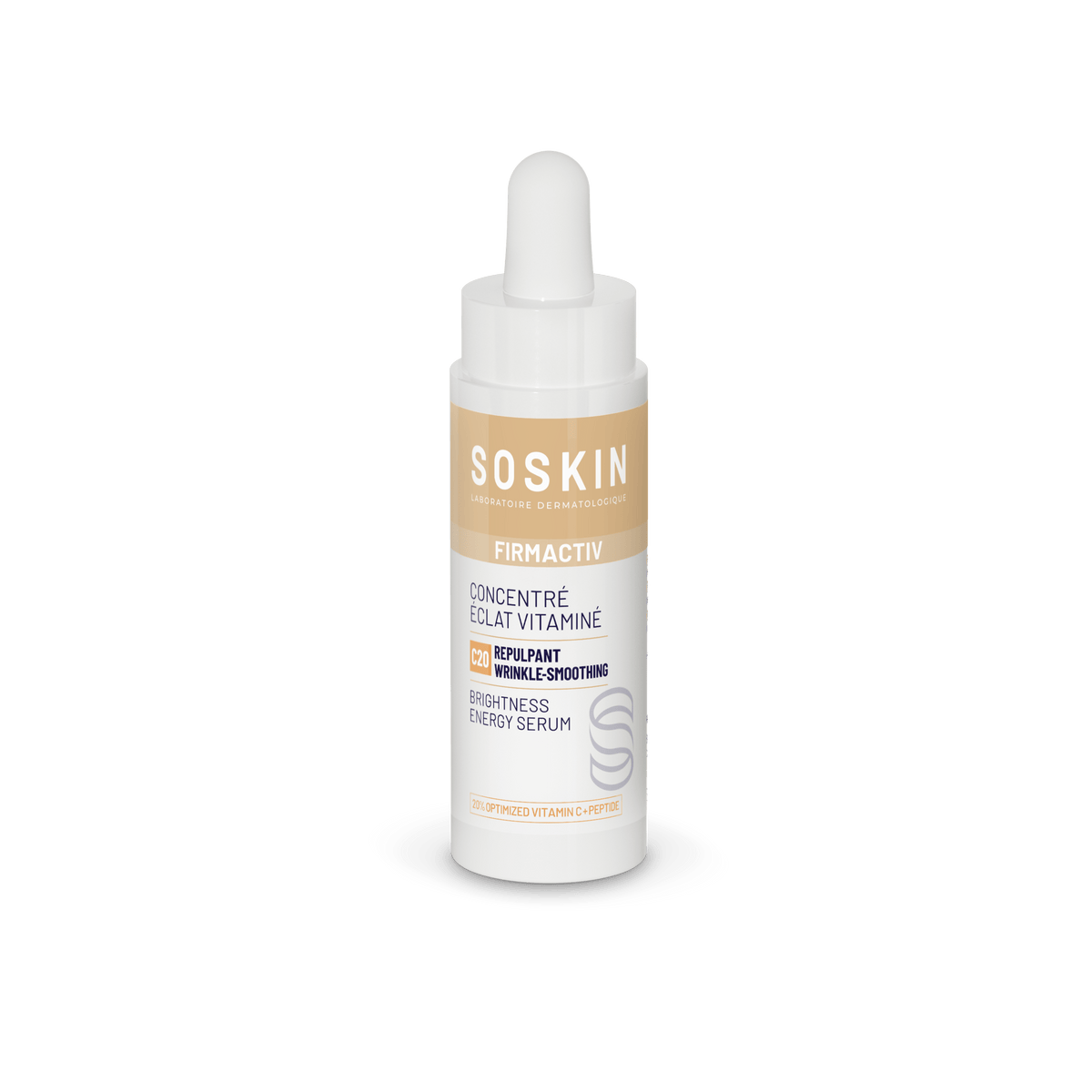
It is in this logic that Soskin developed the Firmactiv range, formulated around optimized forms of vitamin C, in order to offer visible effectiveness while guaranteeing optimal tolerance on a daily basis.


 firmactivUp to 7,00€ off
 firmactiv
 firmactivUp to 5,00€ off