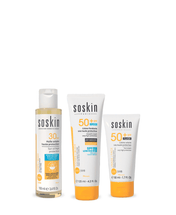


COVER.MD FLUID FOUNDATION SPF30 is a dermatological mineral foundation new generation which combines high coverage, natural finish and caring action. Designed to suit all skin types, it immediately corrects complexion while visibly improving skin quality day after day.
Thanks to his highly tolerated formula, COVER.MD FLUID FOUNDATION is suitable for all skin types, even the sensitive, reactive or blemish-prone skin.
✔ Why choose COVER.MD FOND DE TEINT FLUIDE SPF30 foundation?
- Foundation SPF30 : daily protection against UV rays
- For its high coverage, natural formula and without mask effect
- Foundation for sensitive skin, reactive, anti-redness.
- Non-comedogenic, it does not clog pores
- Formula without ingredients contraindicated during pregnancy
A mineral formula inspired by skincare
The mineral pigments of natural origin offer excellent tolerance and a soothing anti-redness effect. They even out the complexion while respecting skin balance.
The jojoba and sunflower vegetable oils nourish the skin, provide comfort and help regulate excess sebum, making this foundation ideal for combination to oily skin.
Rosemary leaf extract, a powerful antioxidant, purifies the skin, stimulates microcirculation and helps limit imperfections.
The plant-based humectants maintain hydration and form a protective film for supple and comfortable skin all day long.
A caring foundation for more beautiful skin
Day after day, complexion irregularities, excess sebum and imperfections visibly fade.
COVER.MD FLUID FOUNDATION SPF30 offers soft protection, perfectly tolerated, without compromising on comfort or the natural rendering of makeup.
Why did you choose mineral pigments in the COVER.MD FLUID FOUNDATION SPF30 range?

First of all, mineral pigments have a natural origin, coming from minerals extracted from the earth, which is an important point for some users (here are some examples of minerals iron oxides, titanium dioxide, mica, zinc, ultramarines, etc.)
This choice of mineral and non-synthetic pigments allows for colors that are a little less vivid but which do not alter in fact these pigments are very stable to light and heat, and not very sensitive to oxidation. These pigments provide soft colors, a natural and slightly luminous finish with high covering power and can be modulated depending on the quantity of foundation applied.
COVER MD. FLUID FOUNDATION SPF30 are also skin care products, the use of mineral pigments allows very good tolerance, a low risk of allergy, and is suitable for sensitive or reactive skin. These pigments offer Natural UV protection and anti-inflammatory properties.
Why did you include SPF30 in COVER.MD Fluid Foundation?
These SPF30 fluid foundations are part of the daily routine, as the ultimate touch of skincare. The objective is therefore to offer a high coverage, high tolerance and high performance foundation that fits into all routines. For oily skin, because it does not clog pores, and is non-comedogenic, for reactive skin thanks to the soothing active ingredients which limit redness in the formula, and skin looking for uniformity because it will blur residual marks and other irregularities for a flawless complexion. All skin care professionals agree on the need to wear at least SPF30 protection every day in order to limit the harmful effects of UV rays as much as possible. They can lead to premature aging of the skin, a lack of hydration, pigment spots and other disorders that we wish to regulate.
The objective of this foundation is to treat and correct what we are trying to camouflage!
Understand the complexion, its tones and choose the right shade?
To fully understand and define your own tone it is necessary to understand the vocabulary, the skin tone and the undertone, here is a small summary table in order to fully understand the difference between these colors.
So we will first define the tone/complexion of the skin, then the undertone:
| Element | Definition | Main Features | Recommended foundation |
|---|---|---|---|
| Complexion / skin tone | Overall skin color | Light, medium, dark | To be defined first |
| Cool undertone | Pinkish or purplish undertones | Blue or purple veins | BEIGE |
| Neutral undertone | Mixture of pink and yellow | Blue-green veins | COOL |
| Warm undertone | Golden, coppery shades | Green veins | GOLD |

- Cool tones, with shades of pink and purple will be on a BEIGE foundation shade
- The more neutral tone, with shades of pink and yellow will choose the COOL foundation
- Finally, the warm tone will have a golden yellow, coppery shade and will prefer the GOLD foundation.
Did you know you can find your shade in the veins on your wrist?
It is a simple technique to identify the most suitable tone, if the veins are blue, purple then we are on a cold tone, for a mixture of blue and green, it will be a neutral tone, finally the veins which appear very green correspond to warm tones.