

Did you know that more than 80% of skin cancers are linked to excessive exposure to the sun? A suitable facial care routine is therefore essential to protect and enhance your skin on a daily basis.
Indeed, to obtain glowing skin, several key factors come into play: a good night's sleep (minimum 7 hours per night, ideally 8 hours), sufficient hydration (at least 1.5 liters of water per day), and a balanced diet rich in vitamins A, C and E to stimulate collagen production. However, these lifestyle habits must be accompanied by a well-structured morning and evening facial care routine.
This is why we developed this simple 28-day method, based on natural active ingredients such as hyaluronic acid. and the plant extracts that you will find in SOSKIN products. So, whether you have combination, sensitive, oily or mature skin, you will discover how to adapt your facial care routine to your specific needs.
Over the four weeks, you will learn the precise order of application of treatments, the essential actions to maximize their effectiveness, and tips for maintaining results over the long term. Are you ready to transform your skin in just 28 days?
Week 1: Prepare your skin with a basic routine
To begin your skin transformation, you must first establish a solid foundation. The first week is dedicated to learning the fundamental actions that will allow your skin to regain its natural balance.
Cleanse morning and evening with a gentle SOSKIN gel
Cleansing is the cornerstone of any effective facial care routine. SOSKIN Gentle Purifying Cleansing Gel effectively eliminates excess sebum and impurities without drying out the skin. Its soap-free formula respects the balance of reactive skin and reduces the risk of irritation.
Apply this gel morning and evening to damp skin, lather then rinse thoroughly. This cleanser contains a botanical complex of green tea, calendula and rosemary which actively fights against the appearance of imperfections. Tea tree essential oil regulates excess sebum while cucumber extract, rich in vitamins and trace elements, refreshes the skin and limits the risk of irritation.
Moisturize with hyaluronic acid cream
After cleansing, hydration is essential for all skin types. Hyaluronic acid, naturally present in our body, can retain up to 1000 times its weight in water. This molecule acts like a sponge by attracting and maintaining moisture in the skin.
Apply your moisturizer morning and evening to clean skin. For combination to oily skin, opt for a light or gel texture, while dry skin will benefit from a richer texture. Daily use of a hyaluronic acid cream helps reduce fine lines while improving your skin texture.
Identify your skin type to adapt care
Knowing your skin type is essential to choosing the right products. To carry out a simple self-diagnosis, clean your face and wait one hour without applying any product. Next, apply a tissue to your face:
- If your entire face leaves a mark: oily skin
- If only the T zone is affected: combination skin
- If no trace is visible: dry or normal skin
By correctly identifying your skin type, you will be able to select the treatments that precisely meet your needs.
Adopt a diet rich in antioxidants
Glowing skin is also nourished from the inside. Antioxidants protect the skin against free radicals responsible for premature aging. Incorporate into your diet red fruits rich in vitamin C which stimulate the production of collagen, dark chocolate (minimum 70% cocoa) which improves skin hydration, and nuts and seeds rich in vitamin E which deeply hydrate the skin.
Green vegetables such as spinach and kale, rich in beta-carotene, promote cell renewal, while green tea, thanks to its catechins, provides anti-aging and anti-inflammatory properties.
Week 2: Boost radiance and regeneration
After establishing the foundations of your routine, the second week aims to intensify the results by introducing more powerful active ingredients. This phase is crucial to awaken the natural radiance of your skin.
Integrate a serum with vitamin C or niacinamide
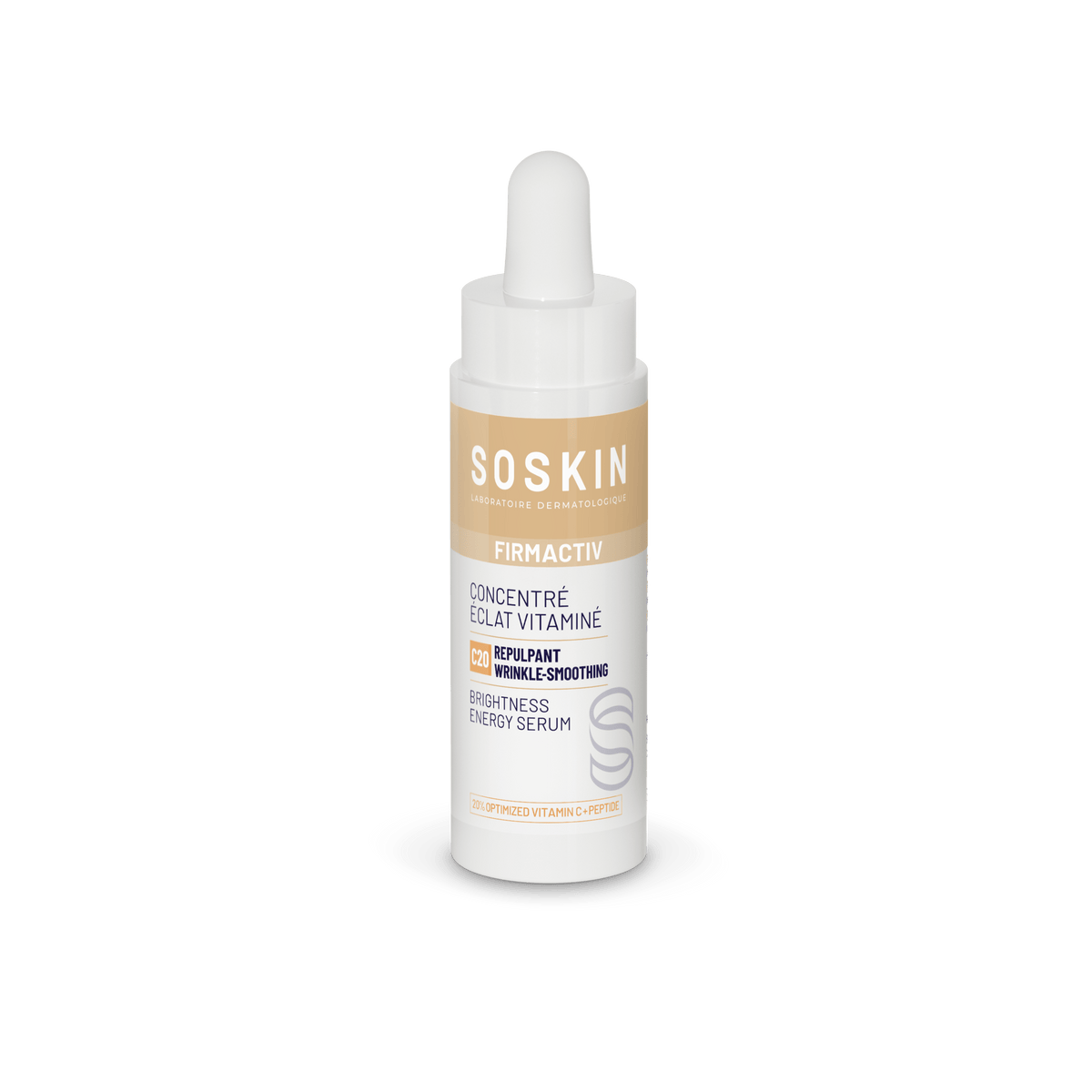
To revive the radiance of your complexion, use SOSKIN C-BRIGHT Radiance Serum. Apply a few drops every morning before your moisturizer. Vitamin C effectively fights pigment spots while evening out the complexion. Alternatively, niacinamide (vitamin B3) regulates sebum production and tightens enlarged pores.
Exfoliate 1 to 2 times per week with a gentle AHA
Exfoliation with alpha hydroxy acids (AHA) gently removes dead cells. Use SOSKIN Radiance Scrub once or twice a week, preferably in the evening. Apply to dry skin, avoiding the eye area, then rinse thoroughly. This step accelerates cell renewal and prepares your skin to better absorb subsequent treatments.
Use a SOSKIN moisturizing mask in the evening
Twice a week, treat your skin to the SOSKIN Moisturizing Mask. Leave on for 10 minutes then remove the excess with a toner. This intense treatment visibly plumps the epidermis and restores the hydrolipidic film.
Sleep at least 7 hours to promote regeneration
Furthermore, don't neglect the importance of sleep. It is during this period that your skin naturally regenerates. Insufficient rest leads to dull complexion, dark circles and accelerated skin aging. So adopt a relaxing ritual before bed to optimize the quality of your sleep.
Week 3: Strengthen the skin barrier
The third week focuses on strengthening your skin's natural barrier, essential to protect it from external aggressions and prevent dehydration.
Apply a cream rich in ceramides or panthenol
Panthenol (provitamin B5) plays a crucial role in the regeneration of your skin. This active ingredient intensifies the skin's ability to retain its hydration and strengthens its natural barrier function. It also encourages cell renewal and has anti-inflammatory properties. Likewise, ceramides, essential lipid components, help retain water in the skin to maintain hydration. Apply SOSKIN Repair Cream morning and evening to clean skin to benefit from these active ingredients.
Protect your skin from UV rays with a minimum SPF 30
Daily sun protection is essential, even in winter. SPF 30 protects against UVA and UVB, responsible for premature aging. Apply SOSKIN sun protection generously after your moisturizer and reapply every two hours in case of prolonged exposure.
Use a hydrating mist during the day
Moisturizing mists bring freshness and suppleness to your skin throughout the day. They also help protect against external aggression. Spray SOSKIN Moisturizing Mist 20-30 cm from the face to revive your complexion.
Avoid attacks: pollution, tobacco, stress
Pollution accelerates skin aging by releasing free radicals. Furthermore, stress generates cortisol, a hormone which weakens the skin barrier and leads to dehydration. Limit exposure to pollutants and adopt relaxation techniques to preserve your skin.
Week 4: Stabilize and maintain results
The last step of your program consists of consolidating what you have learned and ensuring the sustainability of your results. Now that your skin is regenerated, it's time to adopt sustainable habits.
Adopt a sustainable morning and evening facial care routine
Sustain your results by maintaining a consistent routine. In the morning, after cleansing, apply a serum targeting your specific concerns, followed by a SOSKIN moisturizer and sun protection. In the evening, opt for a more thorough cleanse followed by a nourishing cream. Applying a moisturizer after a shower is particularly effective, because the softened stratum corneum allows better penetration of the active ingredients.
Adapt care according to the season (summer/winter)
In winter, choose richer textures to counteract drying caused by heating and cold. Include products containing ceramides or hyaluronic acid to strengthen the skin barrier. In summer, lighten your routine with gel textures and strengthen your sun protection. Listen to your skin's changing needs and adjust your care accordingly.
Do a weekly gentle scrub
Weekly exfoliation is essential to maintain the radiance of the complexion by removing dead cells. For normal to combination skin, use SOSKIN Gentle Radiance Scrub 2 to 3 times a week. For sensitive skin, opt for a grain-free scrub like Doux Foliant with Lily Essences. Apply in circular motions, avoiding the eye area, then rinse thoroughly.
Continue a balanced diet and hydration
Maintain your consumption of foods rich in antioxidants which fight against free radicals responsible for skin aging. The essential fatty acids present in fatty fish, nuts and vegetable oils strengthen your skin's hydrolipidic barrier. Continue to drink 1.5 to 2 liters of water daily to maintain optimal hydration of your epidermis.
Conclusion
After these 28 days, your skin has undoubtedly undergone a real metamorphosis. This simple but effective method has allowed you to understand the specific needs of your skin while gradually integrating the essential actions for radiant skin. SOSKIN products, rich in natural active ingredients such as hyaluronic acid, vitamin C and botanical extracts, have certainly played a crucial role in this transformation.
Remember that the key to radiant skin lies above all in consistency. In fact, the results obtained will only last if you maintain this routine adapted to your skin type. In addition, the balance between external care and internal habits remains fundamental – good hydration, restful sleep and a diet rich in antioxidants perfectly complement your topical care.
The natural active ingredients present in SOSKIN products will continue to act deeply on your skin over time. For example, the gentle purifying cleansing gel with its botanical complex, the C-BRIGHT Radiance Serum rich in vitamin C, or the Repair Cream with ceramides and panthenol will become your daily allies to preserve the regained radiance.
Your skin is unique and constantly evolves with the seasons and years. So, don’t hesitate to adjust your routine according to their changing needs. SOSKIN formulations, developed to respond to different skin problems, will support you in this personalized approach.
Ultimately, this 28-day method is not just a temporary program, but rather the beginning of a harmonious relationship with your skin. The resulting natural beauty reflects as much the loving care you provide as it does your commitment to your overall well-being.