

Sun protection: complete guide to choosing the right SPF for your skin
Sun protection is not only essential during the summer holidays, but is an essential beauty gesture all year round. Knowing how to choose the right SPF for your skin can make the difference between effective protection and long-term skin damage. Discover in this complete guide everything you need to know to select the ideal sun protection and preserve your skin.
Understanding SPF Indexes and What They Really Mean
The SPF (Sun Protection Factor) or FPS (Sun Protection Factor) index indicates the level of protection that your sunscreen offers against ultraviolet rays, particularly UVB, which cause sunburn. But what do these numbers really mean?
An SPF index reflects the amount of UV transmitted to the skin according to formula 1/index:
- With SPF 10, your skin receives 10% of UV rays (1/10)
- With SPF 30, it only receives 3.33% (1/30)
- With SPF 50, only 2% of UV rays reach your skin (1/50)
- With SPF 50+, less than 2% of rays reach your epidermis
Contrary to popular belief, the difference between SPF 30 and SPF 50 is minimal in terms of percentage of protection. However, this small difference can be crucial for sensitive or at-risk skin.
An essential point to understand: the SPF index mainly measures protection against UVB, but a good sunscreen must also protect you against UVA, which is just as dangerous in the long term because it is responsible for premature skin aging and is involved in the development of skin cancers.
The different types of solar filters: advantages and limitations
There are two main categories of solar filters, each with their own characteristics:
1. Chemical (or organic) filters
- Absorb UV rays and transform them into heat
- Texture often lighter and invisible on the skin
- May cause irritation in some people
- Some are controversial for their potential impact on health and the environment
2. Mineral (or inorganic) filters
- Mainly zinc oxide and titanium dioxide
- Form a physical barrier that reflects UV rays
- Ideal for sensitive skin and children
- May leave white marks but modern formulations are increasingly transparent
- Generally considered more environmentally friendly
For optimal protection, always look for products that offer “broad spectrum” protection that covers both UVA and UVB. Regulations now require that creams protect against both types of UV, with a minimum ratio of 1 to 3: a cream that displays an SPF of 30 must guarantee protection against UVA of at least index 10.
How to choose your protection according to your skin type
The choice of your sun protection should not be left to chance. It depends on several factors, including your skin type, the sensitivity of your skin to the sun (phototype), and the exposure conditions.

Sensitive and reactive skin
Sensitive skin requires special attention to avoid unwanted skin reactions:
- Favor mineral filters (zinc oxide, titanium dioxide), known for their skin tolerance
- Opt for formulas without perfume or alcohol to reduce the risk of irritation
- Choose a high SPF (50 or 50+) for maximum protection
- Look for formulations enriched with soothing ingredients like Allantoin or bioactive mushroom polysaccharides
- Check that the product is labeled “for sensitive skin” or “hypoallergenic”
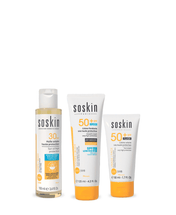
This Sun spray SPF50+ is specially formulated to offer high protection to the most delicate skin, with a light texture that does not leave a greasy film. Controversial sunscreens are banned there: endocrine disruptors and suspected of being toxic to the marine environment. The finished formula and its filters have been tested in marine conditions and do not have any harmful impact on the marine environment and corals.
Acne-prone skin
Contrary to popular belief, acne-prone skin also needs sun protection, but with suitable formulations:
- Look for “non-comedogenic” to ensure that the product does not clog pores
- Favor light, fluid or gel textures that do not overload the skin
- Opt for mattifying formulas that control excess sebum
- Prefer protections containing niacinamide (vitamin B3), known for its sebum-regulating properties
- Avoid formulas that are too rich or oily which could worsen acne
For example, the High protection invisible fluid SPF50 with its invisible and non-comedogenic formula is perfectly suited to combination to oily skin.
Mature skin

Mature skin has specific sun protection needs:
- Choose a high SPF (50+) for maximum protection against photoaging
- Favor formulas enriched with antioxidants (vitamin E, white tea) to fight free radicals
- Look for anti-aging ingredients like peptides, hyaluronic acid or plant-based retinol
- Opt for nourishing textures if your skin is dry, or lighter formulas if it's normal to combination
- Consider tinted protections that even out skin tone while protecting
Our solar range offers solutions adapted to each skin type, with formulations that combine high protection and skin care.
Optimal application: mistakes to avoid
Sun protection is only effective if it is correctly applied. Here are common mistakes to avoid:
1. Applying an insufficient amount
To calculate the protection index of a cream, the tests are based on an application of 2 mg/cm² of skin. In reality, most users only apply 0.5 to 1 mg/cm², considerably reducing the effectiveness of the protection. At 1 mg/cm², an index 50 cream only filters 86% of UV rays instead of 98%.
2. Wait until you are already exposed
Apply your sunscreen 15 to 30 minutes before exposure to allow the product to form an effective protective film on your skin.
3. Forgetting to renew the application
Reapplication is essential, especially after swimming, sweating or towel drying. A good rule is to reapply every two hours at least.
4. Neglecting certain areas
Don't forget the ears, the back of the neck, the instep, the back of the hands and the décolleté area, often neglected but particularly exposed.
5. Believing that makeup with SPF is enough
Cosmetics incorporating SPF protection (foundation, powder) do not replace a dedicated sunscreen. They can complete your protection but do not form as effective a protective film.
Sun protection and the environment: our eco-responsible approach
Protecting your skin should not come at the expense of the environment. Numerous studies have demonstrated the negative impact of certain chemical filters on marine ecosystems, particularly coral reefs.
Our solar range is part of an eco-responsible approach:
- Formulations using filters selected for their lower environmental impact
- Recyclable and eco-designed packaging
- Biodegradable formulas that respect aquatic environments
- Local production in the south of France, limiting the carbon footprint
- Commitment against animal testing for many years
Our SPF50+ Spray offers optimal protection while respecting both your skin and the environment, with a nanoparticle-free formula and carefully selected ingredients.
Sun protection is an essential step to preserve your skin capital and prevent premature aging of the skin as well as the risk of cancer. By choosing protection adapted to your skin type and applying it correctly, you will fully benefit from the benefits of the sun while limiting its harmful effects. Our complete range of solar products offers you tailor-made solutions for all skin types, from the most sensitive to the most resistant, with proven effectiveness and respect for the environment.